Sunday, May 25, 2008
Pakistani visits his birth place in India
NOVEMBER / DECEMBER 2007
Engineer Bashir Ahmad Khadim,
Retired Chief Engineer T&T/PTCL (Telecommunications)
khadimbashir@yahoo.com
House Number 226 Street 18 Sector F-10/2 ISLAMABAD.
Telephone No. (051) 2212476 CELL: (0092) 0345-5096929 ABOUT THE AUTHOR
Author of this travelogue “MY TRAVEL TO INDIA” is Engineer Bashir Ahmad Khadim who is a retired Chief Engineer (telecommunications) of Pakistan T&T/PTCL. He was born in village called Dhanauree which is located six kilometers in the east of historic town called SAMANA of district Patiala in the Indian Punjab province. He was five or six years of age when the partition of undivided India took place in 1947 when he migrated to Pakistan separated from his kith and kin in the caravan of refugee Muslims comprising 92 villages going from their camp at Ratta Khera/GIORA situated on the right bank of Ghaggar river to Shahabad Railway Station near Ambala. Many of his near blood relations were mercilessly murdered during the riots and ethnic clashes of 1947.
After migration to Pakistan in 1947 the author suffered from numerous un-mentionable serious problems including starvation and maltreatment from his Pakistani brethren who had not seen the miseries and large scale merciless murders of 1947 riots, arson, looting and cruelties. For many years he had to work as an ordinary railway coolie sleeping on the railway platforms and carrying unbearable heavy loads of the rail passengers. Once he was forced to carry too heavy a load belonging to a cruel passenger who thrashed him severally on his refusal to do so. As a result of this sad incident the author who was a kid at that time fainted instantly and remained in a state of coma for many months in the T.B. Hospital Sargodha city where he was treated for more than one year. This tragic incident, however, turned his pattern of life and taught him the real value of education to get rid of manual labor. He purchased an Urdu primer and started learning on self-help basis. However, to make his both ends meet he had to continue manual labor till1957 when with the help and guidance of a holy teacher named Rao Abdus Sattar he qualified his matriculation with a great distinction although he had had no proper schooling at all. Most of his education has been as we proverbially call “via Bhathinda” which means totally unconventional. However, with the sheer blessings of God Almighty he graduated in electrical engineering and specialized in telecommunications. He served on many elevated foreign assignments in many countries like U.K, West Germany, Saudi Arabia, U.A.E., Japan, Philippines, Thailand and China etc. He retired as a Chief Engineer (telecommunications) of Pakistan T&T/PTCL, Government of Pakistan on 13th of August 1999. After retirement he served and is still serving as a consultant to many important organizations. He is the President of Capital Citizens Committee (CCC) for the last nine years engaged in the social welfare of our poor masses and development of our most neglected sectors of life. He is a visiting professor of many reputed institutions. He has no particular bias against any community and he is always influenced by logic and rationalization of complex issues and disputes. He served as an impartial unbiased official arbitrator to many complex disputes involving corers of rupees. He is always guided by universal principles and divine revelations. He firmly believes in and wants pure justice for all irrespective of creed and relation.” Let the truth, prosperity and goodness prevail everywhere” is his motto of life. He has love for all and hatred for none. He wishes to be excused and fully pardoned by God Almighty and all human beings for his intentional or unintentional injustice, rudeness or misbehavior at any stage of his life which has been all along extremely full of struggle but very rewarding in all respects.
Author: Bashir Ahmad Khadim Dated at Islamabad Pakistan: 13th of December 2007.
FOREWORD
I am neither a professional writer nor a traveler. After many years of tiring efforts I and my wife were able to get the visit visa for thirty days to see our places of birth in India. At the time of partition of undivided India in 1947 I was probably five years of age and my wife was only three years. What was seen by us has been brought in black and white lest we forget it after some time. Whatever has been written in the enclosed pages is a sort of travelogue based on facts and not on fiction. One of my close friends after reading the preliminary draft of this travelogue commented that I have unnecessarily praised many aspects of Indian life. Yes indeed I have done so as I myself saw them through my own eyes and wisdom. How can you deny something which you yourself have seen repeatedly? Worst type of dishonesty to me is that you write what you have not seen and hide what you have seen. So please note that my travelogue is not a fiction but it is the plain description of what was seen and understood according to my own best judgment. I have tried to narrate the facts without any bias what was seen and experienced by us keeping always the facts in view without any distortion whatsoever. I have skipped some events as these could mar someone. My judgment of a situation or event is based on my observations which may be influenced by my ideology and experience to draw conclusions or derivations of what I saw during my visit of India.
We Pakistanis and Indians have already wasted sixty years of our sources and resources in maligning each other. I earnestly pray and appeal that it is high time we rethink immediately what has already been lost and what can now be saved as rational human beings. There are so many countries in the world and there are many neighboring countries that have serious differences among themselves but they are not so blind and irrational as we are in India and Pakistan always wasting our energies in futile things and matters. The general masses on both sides of the border have already suffered too much. Let us take pity on them and do something genuine for their welfare and prosperity. Let us minimize our defense budget to develop other sectors of our life which have been ignored so far. May God Almighty show us the right path to follow?
Have we ever bothered to think for a moment what shall happen if there is a nuclear war between Pakistan and India? I have seen the alarming fate of Hiroshima in Japan. It is still a nightmare for the entire world. Let us learn a lesson from the horrible destruction and it’s after effects. Father, brother and uncle of my wife were mercilessly killed by the Sikhs and Indian military during the partition of undivided India in 1947. She cannot peacefully sleep even now after the passage of more than sixty years. She almost fainted during our recent visit to India when she saw the place near the bridge of Sirhind canal where their caravan was mercilessly murdered. The territory across the bridge was that of a Muslim state called Maler kotla where they could take a safe refuge to save their lives. However the caravan was not allowed by the Indians to go there.
Sixty years after the partition of India, are we now mature enough to learn a lesson from our bitter past that we shall avoid any such tragedies in the future?
EXPRESSION OF MY HEARTIEST GRATITUDE
I thank them all who have been helpful to us in any way during our recent visit to India. I very honestly thank my hosts at Delhi, Dhanauri, Chintanwala, Samana, Karnal and many other places. I want to particularly thank as summarized below:
(1) Mr. Arvind Rathi and his family members including his driver Mahinder and G.M.Admin. Wingspan Aviation Delhi, Madam Aparan (2) Mr. V.K. Pehalwanjee and his lovely friends, Mr. Bobby, Satinderpal Singh, Sardar Tarsame Singh and Aniljeet (3) S. Sumti Sagar Jain and his family members including S. Devakar Jain, Madam Eila and Bhawna (4) Baba Santosh Singh and his family members (5) Sardar Harbhinder Singh and his family members (6) Sarpanch Dhanauri, Sardar Gurcheet Singh and his family members particularly the lovely doll (7) Sardar Pyara Singh and his family members (8) Sardar Atar Singh and his family members including Prince Pal Singh and baby Sonam (9) Sardar Shamsher Singh and his family members (10) Sardar Yadwinder Singh and his family members including his two lovely kids (11 ) Sardar Jaswander Singh and his family members in particular charming baby yashab (12) Sardar Bhupinder Singh and his family members and neighbors (13) Pandit Lubhaya and his family members including his neighbors(13) Sardar Shamsher Singh and his friend poets and artists (14) The electronic and print media who interviewed us and displayed our interviews on many TV channels and newspapers at a time (15) Police stations and Kotwali staff who were unbelievably nice and kind to us (16) Incredibly good CID and Security staff we met (18) Retired police officer, Sardar Mall Singh and his brother Sardar Shabeg Singh (19) Dr. Sonita of Agricultural University Haryana Karnal who entertained us with most delicious breakfast ( 20) Teachers, students and members of the Administration and Management Committee of Model Public School and College at Dhanauri village.
Last but not the least we extend our heartiest warm gratitude to the most respected Sardarjee at the Indian embassy visa counter at Islamabad. We wish to know his name so that we could personally thank him for his great help in getting the long desired visit visa for India to see our places of birth. I also thank my son, Engineer Eisa Bin Bashir Khadim for editing and formatting the text repeatedly with great pains.
There could be many errors or ommissions in the enclosed travelogue. I shall be very much obliged if someone suggests any improvements or essential amendments. I thank in advance.
Engineer Bashir Ahmad Khadim, H.N. 226 Street 18 Sector F-10 / 2 Islamabad Pakistan.
Phone : 0092 51 2212476 Mobile: 0345 5096929
E-mail: khadimbashir@yahoo.com
Dated: 13TH of December 2007
Introduction:
W
e migrated from India to Pakistan in 1947. These were terrible times. Your neighbors and most trusted friends wanted to kill you for nothing. Massacre, looting, arson and selfishness prevailed every where. Why? Nobody knew the reason. It was perhaps the logical consequence of our large scale misdeeds. It is strange indeed that great leaders like Quaid-e-Azam Mohammad Ali Jinnah, Mahatma Ghandi and Jawahar Lal Nehru could not foresee the great national disaster and the serious complications of large scale migration at partition of India in 1947. Had they foreseen the tragedies of large scale migration they would have planned to minimize the miseries of the masses migrating from one part of the country to the other. Migration of masses on such a large scale is very rare in human history.
I was probably five years of age or may be six when the partition took place in 1947. My parents were illiterate except that they could read and write “Gurmukhi” language which is in fact “Indian Punjabi” which has a totally different textual structure of writing although the spoken language is the same as Hindi. There was no school in our village to teach simple Urdu or the Holy Quran. There was a unique school in the mosque of my mother’s native village called Shadipur. This school was run by a saint named Maulvi Mohammad Sharif who was also the postman of our area. It was strange that nobody followed his example anywhere else.
He not only taught the children of the area but also cooked food for them as an incentive for the children and their parents. Thus he spent whole of his salary for the good cause of education. A little before the partition I also became his student but learnt almost nothing from him. It is because I was extremely fond of playing and had absolutely no interest in seeking education. My parents being illiterate did not care much. I wish someone could guide me properly at that time.
I was very fond of seeing new places. That is why my father and uncles would carry me on their shoulders to Samana town and many other surrounding villages. This explains how and why I could recognize most of our old streets, houses, wells, lands and surrounding villages. Residents of our old village were surprised at my old recollections. I wish I could start my studies earnestly at that time.
Brief Background:
I
n 1947 we migrated from India to Pakistan at the time of partition. My parents lived in village Dhanauri of Patiala state in India. I was five years of age when the partition of undivided India took place in 1947. My grandfather, Ch. Ata Rasool Arrayeen was the Numbardar/Headman of the village Dhanauri which was situated six kilometers in the east of an important historic city called Samana where the tomb of Imam Hazrat Mash-Had Ali Wali also known as Panj Peer is located which was originally built under specific instructions of Mughal Emperor, Akbar the great.
Ninth Imam of Shias was Hazrat Mohammad Taqi whose wife was called Bibi Samaana. Hazrat Mohammad Taqi had five sons one of them being Hazrat Ali Naqi who became the tenth Imam and another one was called Hazrat Mash-had Ali Wali. On the advice of Hazrat Ali Naqi, Hazrat Mash-had Ali Wali migrated to India in the year 860 AD. About twelve hundred other Muslims accompanied him. All of them settled at Samaana town and most probably, Hazrat Mash-had Ali Wali had named this town attributing it to his mother called Bibi Samaana.
After the death of our holy prophet, Hazrat Mohammad, peace is upon him (573 to 636 AD) twelve Shia Imams came one after the other successively. Their names are (1) Hazrat Ali (2) Hazrat Hasan (3) Hazrat Hussain (4) Hazrat Zain-ul-Abedeen (5) Hazrat Mohammad Baqar (6) Hazrat Jafar-e-Sadiq (7) Hazrat Moosa Kazim (8) Hazrat Ali Raza (9) Hazrat Mohammad Taqi (10) Hazrat Ali Naqi (11) Hazrat Hasan Askari (12) Hazrat Imam Mehdi. Samana town is therefore an important historic place for Muslims.
Our Repeated Efforts to Get the Indian Visit Visa to See Our Places Of Birth and Our Failures To Do So:
My grandfather, Ch. Ata Rasool Arrayeen Numbardar of village Kot Asaysh (alias Sed Da Kot) tehsil and district Gujranwala died at the age of one hundred and thirteen years. Kot Asaysh is located between the famous towns of Qila Deedar Singh and Qila Mian Singh in district Gujranwala. My grandfather wanted to visit his original homeland at Dhanauri and he tried his best efforts to get the Indian visit visa for the last twenty years of his life but he failed. Then my father, Ch Mohammad Ismail Arrayeen alias Saundhi became Numbardar of village Kot Asaysh. He also tried to get the visa for visiting his place of birth at village Dhanauri of district Patiala located in the province of Indian Punjab. He failed too. I also started my efforts about twenty years ago to get the visit visa of my place of birth at Dhanauri but failed till this time when I was very lucky indeed to get the visit visa for me and my wife who was born at Chintanwala town 15 kilometers south west of Nabha town of the Indian Punjab.
How Did We Get The Visit Visa to India?
A
s my youngest son Engr. Eisa Bin Bashir Khadim was to get married on 11th of August, 2007, my eldest son, Engr. Murtaza Bashir Khadim came along with his wife Madiha and his newly born son Mr. Aymen Murtaza from Russia to participate in the marriage. Eisa was happily married with the youngest daughter of Mr. Mohammad Ishaque Awan who is my batch mate and who got retired from PTCL/T&T as Director General. My eldest son and his wife wanted us (me and my wife) to go with them to Russia on a visit visa for a few months. I told them that I had already seen more than half the world on various official assignments and foreign postings at very elevated positions in more than a dozen of countries abroad. I have decided to go first to India for visiting my place of birth at our old village called Dhanauri in district Patiala of Indian Punjab. I have tried several times before and I have utterly failed due to one reason or the other. I wish to try my luck once again. I have resolved on oath that if I fail this time too I shall never visit any foreign country again in the future. This was naturally out of my frustration for not getting the Indian visa.
My Eldest Son Arranges An Invitation For Our Visit To India Through Wingspan Aviation Private Limited Delhi:
I
t was under these circumstances that I obtained the visa forms through my son Eisa who is serving in the Ministry of Water and Power as Deputy Manager (Projects) dealing with the contracting, management and control of various privately built power stations in Pakistan mostly by the foreign organizations. My eldest son who is also a Russian national came to Pakistan to take his wife and son to Saint Petersburg in Russia. He had carefully listened to my solemn oath for not visiting any country abroad if I was not granted an Indian visa to visit my place of birth at village Dhanauri, tehsil Samana district Patiala of Indian Punjab. After some serious thinking he told me that he had some very noble business partners and friends in India. Additionally some big bosses of very important organizations are also intimately related to his business organization in Russia. He proposed to request any of his Indian close friends or some reputed organization to send us an invitation for visiting my place of birth and my wife‘s. It was a great suggestion and I immediately agreed to it.
I and my wife had already filled visa forms and we were about to submit them in the Visa Section of Indian High commission located in the Diplomatic Enclave of our capital Islamabad. But we waited for about a week till we were told that an invitation for us had been directly sent to the Visa Counsellor of Indian High Commission in Islamabad by the General Manager of Wingspan Aviation Private Limited Dehli to visit about a dozen of places in India including my and wife’s places of birth. A copy of the related document was also sent to us which was attached to our visa forms for formal submission. We were very confident this time to get the required Indian visit visa because of the invitation from a reputed organization of India. But our optimism initially failed as will be clear from the following narrations.
Submission Of Our Visa Forms In The Visa Section Of India High Commission At Islamabad:
O
n first of November 2007, I and my wife went to the Visa Section of High Commission of India in Islamabad. To go to the High Commission of India in Islamabad is in itself a cumbersome project due to serious security procedures. Anyway we reached the visa section of the Indian Embassy situated in the diplomatic enclave of our capital Islamabad. But when we saw very long haphazard crowds of the applicants we were much dismayed as it was not physically possible for us to stand in the very long haphazard rows for hours together. However I thought to get some related information from those who were already there standing in the very long rows. To my extreme surprise I was told that there is a separate row and a separate counter for the senior citizens of Pakistan at the visa section of the Indian embassy in Islamabad. It was amazing news and my heart knew no bounds of happiness.
I Meet The Noblest Witty Sardarjee At The Visa Counter Of Indian Embassy In Islamabad:
T
here were hardly a dozen of senior citizens in the row and I joined them happily. My turn came after a few minutes and I went to the visa counter where a very nice and witty Sardarjee was dealing with the applicants at the visa counter behind the window pane. I looked at him and he looked at me through the window pane. He opened a small part of the window pane and asked me to put our visa forms on a small sliding plate at the bottom of the pane. I did so and he drew the visa forms inside. He gazed at the visa forms for a few moments and suddenly turned to me smiling in a very happy mood which also made me instantly happy. “Why do you want to visit India?”, he enquired from me. “To see my place of birth and that of my wife”, I replied instantly. “Do you have your real father, mother, brother or sister living in India?” he asked me again. “None indeed”, I said. He paused for a few moments and obviously he was pondering over something. Then he again turned to me and told me very plainly that there are only two and a half categories to which the Indian visit visa is permissible under the standing rules and I do not fall among any of these categories. My heart sank at this sad information. He looked at me very sympathetically. I requested him to see the attached copy of the document inviting us to visit India on behalf of Wingspan Aviation Private Limited. “Yes, of course I have already seen it”, he told me. “It is for your information that there are thousands of such organizations in India. The invitation does not carry any official weight”, he told me patiently. He, however, noticed extreme disappointment on my face. “May I know the two and half categories to whom the Indian visa is permissible under your policy?”, I made a polite request. He told me that the first category related to the Pakistani businessmen who are duly registered with Chamber of Commerce and Industry of Pakistan. After due verification, the business visa is issued to them within minimum possible time. The second category is related to those Pakistanis whose real father, mother, brother or sister is residing in India. This category takes quite some time to process the visa formalities and on establishment of the related facts the visit visa is issued normally for a week or so. He paused for sometime while he perhaps waited to see me leaving the visa counter. “But what about the half category you told me a little before?” I enquired from him. “It relates to those who go to watch the international sports matches, attend the conferences or want to participate in the annual celebrations of some saints or shrines. No clear cut policy is applicable in all such cases”.
A New Category of Visit Visa for Senior Citizens of Pakistan May Now Be Created For Visit of India:
I
stopped enquiring as there was nothing else to be enquired. I thanked him for his sympathetic behavior and asked his permission to leave the visa counter. I already had taken too much of his precious time. He again looked at me behind the windowpane and asked me to wait for a moment. He started to go through our visa forms once again and after a short pause he enquired from me if I really was the Chief Engineer (M&O)/G.M.(WLL) and the Chief Engineer(System Engineering & Design) of Pakistan T&T/PTC/PTCL. I replied in affirmative. I also told him that I got retired from Pakistan T&T/ PTCL in August 1999. On this reply he became very happy and excited. “Though at present there is no specific category under which you can be allowed the Indian visa but I have a lot of sympathy for you. There must be a new category created for the respected senior citizens who have held elevated positions in Pakistan or abroad without any blot on their careers through out their life. You are one of them and I stand a personal guarantee for issuance of a visit visa for you and your spouse. So be happy and prepare yourself to visit India as soon as you want,” he said with great pleasure and enthusiasm. I had no words to thank him. But internally I did not feel like believing him at all. When I was just to leave the visa counter he asked me to supply him with some of our previous passports. I asked him as to why it was needed. He told me that it would help him in supporting the proposal of creating a new category for the senior citizens like me. I told him that I shall search for any of my previous passports for this purpose. Accordingly I supplied him one of my old passports which had been cancelled by the immigration authorities of Pakistan on issuance of a new one.
We Finally Get The Indian Visit Visa To See Our Places Of Birth:
O
n tenth of November 2007 we were handed over our passports with Indian visa duly stamped on them for thirty days. Oh God Almighty thank you and thousand thanks for the Sardarjee who was so considerate in granting us the long desired visa to see our places of birth in India. May he live long a happy and prosperous life. It was indeed a unique happy moment of our life. I wish I could ask the good name of the Sardarjee at the visa counter of Indian High Commission at Islamabad so that I could personally thank him later from the core of my heart. He is indeed a great man as he helped us out of the way.
After obtaining the visa we were already mentally in India visiting our places of birth. Further waiting for even a day or so was intolerable. So without any preparations we took an early start of our tour to India. Two most amazing things happened at the visa section of Indian High Commission at Islamabad. The first wonder of the world was the presence of a separate row and a separate visa counter for the senior citizens aged sixty years or more. The second wonder of the world was the negligible visa fee of rupees fifteen per head. This should be compared with exorbitant visa fees of other countries. Then and only then we can appreciate this wonder.
Our Journey Starts From Islamabad To Lahore:
O
n 12th of November 2007 at 1500 hours, I and my wife left for Lahore with my youngest son Eisa and his wife Maryam Eisa to visit India next day morning for a total period of thirty days on an invitation of Wingspan Aviation Pvt. (Ltd.) Delhi. Mr. Abdul Karim, my friend who is serving as a Consultant to Noorpur Dairies Bhalwal, District Sargodha met us on the Islamabad-Lahore Motorway at the rest and recreation area near Jehlam River. Then we all went to Mr. Nadeem who is the son-in law of Mr. Abdul Karim, and where Mrs. Attiya Nadeem had prepared delicious food for us. They live in a beautiful newly purchased house in Jauhar Town Lahore. We were all very hungry hence we took our meals after saying our Mughrib (after sunset) prayers. Then we went to condole over the death of Mr. M. Arshad‘s father. From there we went to meet Mr. Ali Mohammad in the PCSIR II housing scheme to get some guidance for locating the house of Ch. Omar Deen Arrayeen of Chintanwala. Ch. Omar Deen Arrayeen was the father of my wife and she was born at Chintanwala three years before the partition of India in 1947. Then Mr. A. Karim took us to his house in Ali Park situated on the PECO Road Lahore where we slept soundly at night. On the next day early morning, we got up and said our morning (Fajar) prayers. Then immediately after having our breakfast we left for Lahore Railway Station where we had to catch the Samjhota Express train going from Pakistan to Dehli, capital of India. Mr. A.Karim hurriedly drove us to the Lahore railway station but we were quite late. Crowds of people going to India on visit visa were there on the railway platform. Most of the passengers had already boarded the train. We rushed to find our reserved seats. The train was already whistling to leave the station. I had taken too much of drinking water last night as per advice of my doctor. I wanted to urinate immediately as I was feeling an intolerable pressure inside my gall bladder.
Our Passports and Identity Cards fell down on the Rails through Commode of Railway Wash Room and there was No Space to Get Down to Fetch them:
S
o after boarding the train I left our luggage with my wife and immediately rushed to the adjoining wash room to ease myself. When I was urinating the train was constantly whistling thereby indicating to leave the station. After satisfying my urgent need I got up and in the meantime our passports and original identity cards slipped out of my pocket and fell down on the rails underneath through the commode of the wash room. It was a sudden unexpected loss. I was stunned. How could we travel further without our passports on which the visa had been stamped? It was a very critical moment of my life. All of my arduous efforts to get the Indian visa had failed and the limits of my disappointment could not be imagined at that time.
I instantly got down the train and ran here and there to find any space through which I could go down on the rails to get our fallen passports and identity cards. I was profusely perspiring although it was a cold season. After running here and there I saw some space between the interconnecting compartments of the train. Without losing a second I jumped down and crawled in between the two rails of the train running towards the wash room where our passports had fallen down. I hurriedly crawled between the rails and lost my breath. At long last I saw our passports and identity cards fully drenched with toilet water. I rushed to catch them and retraced my path. The train seemed to move slightly but it stopped again after a few seconds. On seeing the space between the interconnecting rail compartments I got up to the platform and ran to get into my compartment lest my wife may worry on thinking as to where I had gone without telling her any thing. She noticed my embarrassment and profuse perspiration. She looked at me enquiringly but I did not respond. I was internally feeling a great relief on getting our lost passports and identity cards back although they were drenched and dirty. I went to the wash basin outside the washroom of the train where I cleaned our dirty passports and identity cards with great care. I dried them with a tissue paper. I was now very glad and promised to God Almighty that I shall offer some Nafals (gratitude prayers) on finding our passports and identity cards. The height of my emotions at this critical time could not be imagined.
Our Journey From Lahore Railway Station To Wagah And Atari Railway Stations With Frequent Train Stops And Sluggish Speed And Shameless Scenes Of Large Scale Corruption Of The Immigration And Customs Staff Of Pakistan And India:
T
he local “Samjhota Express” train from Lahore to the border Wagah Railway Station of Pakistan takes about half an hour running at very slow and sluggish speed stopping at numerous places. I have traveled a lot in many countries but I have nowhere else seen such a lethargic railway journey. It shows how inefficient we are regarding our means of communication and use of our precious time.
It took about four hours at the crowded railway station of Wagah to complete the horrible formalities of Pakistani Immigration and Customs staff with rampant shameless open scenes of wide scale corruption with rude and cruel treatment to the passengers. I draw the kind attention of concerned Pakistani authorities to take proper immediate measures to stop this wide scale corruption. May God save us from all evils?
Finally at about 1500 hours on 13th of November 2007 we left the Wagah Railway Station of Pakistan for reaching the first Railway Station of India called Atari where we saw more horrible scenes of wide spread open and shameless corruption and exploitation of passengers committed by the cruel inhuman Immigration and Customs staff of India for about eight hours. Indian government must take early remedial steps in this regard.
Non-Availability of Edibles and Toilets for Passengers At Atari Railway Station:
T
here were almost no edibles on the Atari railway station. Worst of all there were no wash rooms or toilets available for the passengers who had to suffer with intolerable pain of urine and bowls for more than five hours. This forced some of the passengers to urinate and ease out their bowls on the railway platforms which were full of stinking filth everywhere. Worst of all, hundreds of stray dogs were running on the platforms here and there making them filthier and more stinking with their urination and filth. I wonder why these stray dogs cannot be prevented by the Indian Railways. There were thousands of birds on the platform iron ceiling making an intolerable noise and shitting on the passengers. This should be paid proper attention by the Indian railways without any loss of time.
My Battle With The Pakistani And Indian Staff Of Immigration And Customs About Their Large Scale Shameless Corruption And Exploitation Of Passengers:
I
quarreled with many officers of Pakistan and Indian Immigration and Customs staff who openly demanded illegal gratification shamelessly and persistently. Finally Samjhota/Atari Express 4002 down came on the platform and we landed on it with a sigh of relief. It became instantly full up to roof with the smuggled cloth, crockery, shoes and various other goods making the movements of the passengers very difficult. It appears as if Samjhota Express is primarily used for smuggling. I wish concerned authorities of Pakistan and India take suitable action in this regard. The mismanagement and corruption must be avoided at all costs. The cruel and insulting attitude of the immigration and customs staff of India and Pakistan must be stopped forthwith. I think no senior officer has ever traveled to watch the serious irregularities.
The Train Leaves Atari Station for Old Delhi Railway Junction Running Continuously Without Stopping Anywhere:
F
inally the doors of the Samjhota Express train which is also called “Atari Express 4002 down” were locked and at 21:15 hours on the night of 13th of November 2007 it left for old Delhi Railway Junction near Red Fort and Jamia Masjid of Dehli adjacent to the Chandni Chowk Bazaar. The departure and arrival timings of this train were not disclosed to the passengers and this caused a lot of inconvenience to them and their hosts who had to wait for many hours indefinitely.
TO SAVE FOUR DAYS OF THE TOTAL VISA PERIOD PASSENGERS SHOULD BE ALLOWED TO DROP AT THE STATIONS NEAREST TO THEIR VISA DESTINATIONS INSTEAD OF FIRST GOING STRAIGHT TO DELHI:
M
any passengers would like to drop at their destinations before Delhi but they are not allowed to do so. They must first go to Delhi and from there they have to come back to their destinations. This may be an essential requirement for the security reasons but it is extremely troublesome and expensive for the passengers. Indian government may try to find a solution to this serious problem for the convenience of passengers. Passengers must first go to Delhi and then they have to go back to their visa destinations. One day at least is needed to reach Delhi and another one day is necessary to reach their first visa destination. Thus four days of the total visa period would be saved if the passengers are allowed to drop at the stations nearest to their visa destinations. A passenger who is allowed only seven days as the total visa period actually avails only three days. The remaining four days are unnecessarily consumed. This is a great loss to the passenger. Indian government is requested to resolve it as soon as possible.
Locked Samjhota Express with Armed Security Guards Does Not Stop Anywhere on its Way Up to Old Delhi Railway Junction:
B
efore the start of train, fully armed security guards took their alert positions in the rail compartments. The train had to run constantly from Atari railway station to old Dehli railway junction non-stopped anywhere on the way till we reached our destination at quarter past three after midnight of next day on 14th Nov, 2007 (Monday). After leaving the Atari railway station, the train passed by Amritsar, Jallandhar, Ludhiana, Sirhind, Rajpura, Ambala, Shahabad, Karnal and Panipat railway stations and finally reached the old Dehli railway junction at quarter past three at night of 14th of November 2007. This is really an odd time for the passengers who do not have a valid visa for stay at Delhi. No transport is available at this belated time of night for remote stations.
When We Arrived No Pco Was Working At The Old Delhi Railway Station As Their Proprietors Were Sleeping At Night:
A
fter getting down we came out of the old Dehli railway station. It was dark and there was a pin-drop silence outside. Some taxi car and rickshaw drivers rushed towards us for renting their vehicles but we refused as our host at Dehli had to receive us. The timings of start and arrival of Samjhota express are not told earlier to the passengers perhaps due to some security reasons hence we could not inform our host at Delhi about our arrival schedule at Delhi. Our host at Delhi was therefore unnecessarily tortured. I wish they should be saved from this trouble.
Nobody to Receive Us Due To Non-Disclosure Of Arrival Time:
O
ur host at Dehli was Mr. Arvind Rathi ex Airport Manger and presently CEO of Wingspan Aviation Pvt. Ltd. He had to receive us at the old Dehli railway station but he was nowhere to be seen. We had to contact him on phone but my mobile phone stopped functioning. All PCOs at the old Delhi railway station were closed as their proprietors were sleeping at the belated hours of night.
Pakistani mobile phones do not work in India without change of SIM which needs a personal guarantee from some Indian:
Mobiles of the Pakistani passengers stop functioning when they enter Indian Territory. You must change the SIM of your mobile phone if you want to make it functional in India. Change of SIM in India for a Pakistani tourist needs a personal guarantee by some respected Indian. The shops and offices where you can change the SIM of your mobile phone are closed at night when the train arrives at Delhi. You cannot contact your host to inform him that you have arrived at the old Delhi railway junction. What should you do at such a critical time?
We Contact Our Host and His Driver Takes Us To His House:
I
requested one taxi car driver to help me in connecting to our host, Mr. Arvind Rathi. He was extremely kind as he instantly connected me to him by his mobile phone. Mr. Rathi told me that they have been waiting for us for the last nine hours without any information at all. He told me that his driver would meet us within 5 minutes and it exactly happened so. The driver took our luggage and made us sit in a new nice car. He took us to Vasant Kunj at the residence of Mr. Rathi which is located in the south of Dehli at a distance of about 20 kms from the railway station. On the way he showed us distantly the Red Fort, Jama Masjid and Jawahar Lal Nehru University (J.N.U). Mr. and Mrs. Rathi had been waiting for us for the last 9 hours as the schedule of departure and arrival of Samjhota Express train had not been disclosed. We had our detailed gossip while taking our meals. Then we slept as we were very tired. We slept for two hours and then woke up for our morning (Fajar) prayers after which we slept again. We woke up at seven O’clock on 14th of November 2007.
Our Activities on 14th of November 2007:
A
t 0800 hours on 14th November 2007 we had our delicious breakfast and Mr. Rathi told us that his G.M Admin, Madam Aparan shall arrange a guided tour of Dehli after our registration / reporting at the concerned police office. We were taken to the office of Madam Aparan, G.M Admin of Wingspan Aviation. She is a great lady. She welcomed us and after serving refreshments she sent us to the concerned police office for reporting. There we were advised to get our stay extended at Dehli by the immigration office located in the Jaisalmir House of Delhi. If our visa is not extended at Delhi then we would have to report to the concerned police office of our first visa destination which was at village Dhanauri, district Patiala, tehsil Samana. The police reporting/registration at the first visa destination within twenty four hours of landing in India is a mandatory requirement which must be complied with at all costs as per current rules and regulations in vogue. This simply meant that we had to report at our fist visa destination within twenty four hours of our arrival at Dehli. Our first visa destination at my native village Dhanauri was about 300 kilometers from Delhi. This would normally take more than six hours of constant travel without stopping anywhere on the way which is neither possible nor desirable. The passengers have to stop somewhere for taking fuel or relaxing for a cup of tea or coffee. The rules and regulations must be framed on realistic basis.
Serious Problems for Passengers At Delhi Without Visa For Stay:
I
t is for the information of all concerned that Atari Express train which is also called Samjhota Express runs constantly without stopping anywhere on the way till it reaches the old Delhi railway junction. All the passengers are required to first arrive at old Delhi railway junction and then and only then they have to go to their destinations all over India. Although the arrival of all the passengers has to take place necessarily at Delhi railway station as a mandatory requirement of the Indian government, no visit visa is issued to them for any stay at Delhi. This is very paradoxical as the passengers must stay at Delhi before leaving to their first destinations. The Samjhota Express arrives at Delhi railway station after midnight between three and four O’clock next day. Where shall they go after leaving the railway station? No transport is available at the arrival of Atari express at Delhi to numerous remote destinations of the passengers due to late night hours.
One Day Transit Visa at Delhi is a Must for Passengers Going To Remote Stations As Per Their First Visa Destinations:
T
he passengers are extremely tired when they arrive at Delhi due to torture of the immigration and customs staff of Pakistan and India. The train takes at least six hours from Atari railway station to Delhi railway station. The passengers are extremely tired when they reach Delhi. Hence a minimum of one day stop-over must be allowed to the passengers at Delhi. Some destinations of the passengers are very remotely located and it may take more than one day to reach there. How can the passengers meet the mandatory requirement of police reporting/registration at their first visa destination within twenty four hours of their arrival in India? Moreover, the instructions for police reporting / registration are not clear as to which police office should be contacted for this purpose. The most important fact is that most of the police offices are closed after certain office hours. So the passengers must reach the concerned police offices before they are closed. All these vital points must be carefully noted by the concerned authorities and immediate remedial steps should be taken as soon as possible for the convenience of the passengers visiting India. I had to face serious difficulties due to lacunas mentioned above. I, however, appreciate the help rendered by the Indian police and security authorities when we faced such serious difficulties. I, therefore, must thank them for their kindness and help without which our visit to India would have been very troublesome. The passengers going to remote destinations must be allowed at least one day valid visa at Delhi. This would minimize their serious problems during their transit from Delhi to their first visa destinations. I hope Indian government shall be helpful as this is an inevitable requirement for the passengers whose first visa destination is remote.
Indian Immigration Authorities Refused Our Stay At Delhi:
M
r. Arvind Rathi wished us to stay at Dehli for at least one week out of a total visa period allowed to us for thirty days. Hence I went to get our stay at Delhi extended by the Immigration Office located in the Jaisalmir House Delhi. The concerned immigration officer refused my request and told me to report to the concerned police station of our first visa destination which was my native village Dhanaruri six kilometers in the east of Samana town which is the tehsil Headquarter and an old historic place. Mr. Rathi told us to have a brief and hurried tour of Dehli before leaving for Patiala City which is in the north of Dehli at about 300 kilometers. After the hurried tour of Dehli we had a wonderful lunch at Gulati Restaurant where hundreds of foreigners were already dining. After having our lunch we left for Patiala city via Panipat, Karnal, Shahabad, Ambala, Kurukshetra and Rajpura cities by G.T. road originally constructed by Sher Sha Soori.
Midway between Dehli and Patiala, Mr. V. K. Pehalwanjee and Mr. Bobby (friends of my eldest son Murtaza Bashir who is a Russian national) were waiting for us at Bahal Garh. Mr. Mahindr who is the driver of Arvind Rathi and a very noble gentleman handed us over to Mr. V. K. Pehalwanjee and his handsome friend Bobby who drove their car at tremendous speeds and hence we designated him as a pilot. He resembled our eldest son Mr. Murtaza who lives in Russia. Accordingly we named him Murtaza2. We again started our journey to Patiala via Panipat, Karnal, Ambala and Rajpura. We crossed Panipat city and reached Karnal city located on G.T Road originally constructed by Sher Shah Soori running from Afghanistan to Dehli and onwards faraway in the south of India. I felt very tired and Pehalwanjee noted it. He told Mr. Bobby to stop at the Tourism Department Complex of Karnal where we eased out and had coffee / tea and other refreshments. After our half an hour break at Karnal we again started our journey towards Patiala via Ambala, Kurukshetara and Rajpura.
We Reach Patiala City but We Do Not Know to which Police Office we have to Report Our Arrival There:
W
e reached Patiala city at 2100 hours on 14th of November 2007 and had no idea as to which police office we were supposed to report / register. Someone told us to go to the central police station called Kotwali Sadar. The staff of the police station gave us a warm welcome and registered us in their official records. The SHO who was ill came from his nearby residence and met us cordially. The Kotwali staff did not know that we were supposed to report / register ourselves in the office of S.P. (Security) located on the ground floor of district mini-secretariat of Patiala. This lack of essential information made us to violate the mandatory requirement of police reporting within twenty hours of our arrival at Delhi. It was the special kindness of S.P. (Security) of district Patiala who registered us in the back date to comply with the mandatory requirement of the rules in vogue. We extend our deepest thanks to him.
We Stay for Night At Chinar Regency Hotel Of Patiala City:
I
t was 10 ‘O’ clock at night and we were all too tired. The SHO advised us to stay at Kaka Hotel near the general bus stand and railway station of Patiala city. When we went there it was already full and no room was available there. We tried our luck at other hotels but failed to get any vacant rooms. Finally we were lucky to get two vacant rooms in Chinar Regency hotel. It was a modest hotel with very spacious rooms but dirty beds. We were very tired and after having some mixed vegetables and tandoori roties we slept soundly without bothering about our dirty beds. We got up for our morning (Fajar) prayers after which we again went to sleep.
We Have A Hurried Visit Of Patiala City:
W
e paid the hotel dues at 0900 hours in the morning of 15th November 2007 and we went to the nearest Kotwali for our police reporting/registration. They also did not know that their police station was not at all concerned with our police reporting / registration. After that we had a brief and hurried tour of Patiala city. It is a magnificent large clean city with green parks, wide streets, magnificent forts, famous gurudowaras and many places of historic interest such as Qila Mubarik etc.
We Leave Patiala City for Chintanwala Town via Nabha Town:
A
fter our quick tour of Patiala city on 15th of November 2007 we left for Nabha town from where we had to visit the town of Chintanwala located in the south west of Nabha city at a distance of 15 kilometers. There were lush green fields and gardens on left and right of the Patiala Nabha road which is carpeted very nicely. We took our breakfast cum lunch at Mammoon inn of Nabha city and left for Chintanwala where my wife had been born and she was three years old at the partition of India and Pakistan in the year of 1947. She had no knowledge of her old home location except that it was adjacent to a mosque. We enquired about the house of her father Ch. Omar Din alias Ch. Omra Arrayeen. Many men and women came to see us but nobody told us about the exact location of her house. There is a very famous temple called AAPO AAP. I met its religious leader who is a very learned gentleman. We had detailed discussions of the past and present affairs of Chintanwala town. He told me about a Pakistani doctor named Abdul Majeed who had come to see his ancestral house at his native town of Chintanwala. He was accompanied by some police escort that helped him dig his house to search for the hidden wealth. He was lucky enough to find huge amounts of hidden wealth which was taken to Pakistan. He also told me that he is running a reputed clinic probably in Lahore with the name of AAPOAAP. He also told me about the grand gurdowara in Chintanwala where Guru Nanak had stayed for seventeen days. An old Muslim, more than one hundred years of age (named Leeloo Khan) was contacted but even he was unable to tell us about the exact location of my wife’s house at Chintanwala town. Some residents served us with tea and other refreshments. After our disappointment with respect to exact location of my wife’s house in Chintanwala, we decided to leave it and go to Samana town from where we could easily visit my place of birth at village Dhanauri located at a distance of six kilometers from Samana town in the east. I was very keen to see my place of birth at my native village called Dhanauri. So we wanted to leave Chintanwala town where our extensive efforts had failed to locate the house of my wife. We wished to try again later.
We Reached Sirhind Canal Where The Caravan of my Wife was killed and Minced Mercilessly including the Father, Brother And Uncle Of My Wife:
When we reached the left bank of Sirhind canal before the start of Maler Kotla boundary, my wife recollected the killing of her father, brother and uncle along with thousands other Muslims who were going to take shelter and refuge in the Muslim state of Maler Kotla. The caravan was just to cross the canal for their safety when thousands of Sikhs along with Indian military suddenly attacked and killed most of them. This massacre is remembered still by those who somehow survived this fatal attack. My brother-in-law (Hamzulf), Ch. Habib Arrayeen of Chintanwala was one of such very few people. He was attacked and his right arm with neck and spinal chord were seriously injured and finally he fainted. On the third day when he regained his senses he got out from the heap of the dead over him. He went to hide himself in the adjoining sugar cane field when a Sikh saw him. He came to him and asked if he could do something for him. Mr. Habib asked him for some food which was immediately brought by him. He also tore his turban and hung his cut arm to his neck. He then advised him to remain hidden till night when he should cross the nearby bridge over the Sirhind canal. He would be then fully safe as the right bank of Sirhind canal was in the boundary of Maler Kotla state which was a Muslim state where no one could attack.
We Leave Chintanwala Town for Samaana City Via Maler Kotla Town, Dhurre Town, Sangroor City And Bhawani Garh Town:
S
o we started our journey towards Samana town and we tried to find the best route from Chintanwala to Samana town. Some residents of Chintanwala town told us that most of the roads to Samaana are under construction and there is only one reasonably good road to Samaana via Maler Kotla, Dhuree and Sangroor. So we followed this route which did not prove to be a good one. At Maler Kotla we met many Muslims at the shop of Habib Tailors. They served us with milk and sweets. We also visited the biggest Eidgah of Asia at Maler Kotla. There are wonderful gardens and lush green fields on both the sides of the roads. The best quality of vegetables is grown near Maler Kotla. Most of these vegetables are exported to Lahore and its surroundings. At Dhuree we had to find a shortcut to our destination at Samana. After sometime we reached Sangroor city. We were very tired and hungry again. So we searched for a good eating place. Fortunately we got one very good restaurant. We had a very delicious lunch and then we left for Samana city via Bhawani Garh town. We were again tired. So we mtook tea and rested at a restaurant for some time.
We Report at Samaana Kotwali and After Our Hurried Visit Of Dhanauri Village We Return To Samaana City And Stay At The Nri Hotel Called President Plaza Without Any Charges At All:
W
hen we arrived at Samana it was afternoon on 15th of November 2007. We went straight to the Kotwali for police reporting/registration. The staff at police station was extremely cordial. We introduced ourselves and they welcomed us with sweets and tea. We thanked them for their welcome. They also advised us to stay at night in the adjoining NRI (non-resident Indian) hotel called President Plaza. We noted their useful advice for implementation if needed. They told us that our stay at the NRI (none-resident Indian) hotel called PRESIDENT PLAZA shall be totally free of all charges. This was big news for us as there is nothing comparable to this in Pakistan. May be one day we also start this tradition in Pakistan.
For NRI (non-resident Indian) hotels, their proprietors bear all charges and this very good gesture facilitates the passengers. This certainly is a very good tradition which should be copied by NRP (Non-resident Pakistanis) as well.
Our hurried Visit to my Place of Birth at Dhanauri Village:
I
was very anxious to see my native village Dhanauri where I had been born five or six years before the partition of India took place in 1947. Hence just after our reporting/registration at Samaana Kotwali we left for Dhanauri village. One kilometer ahead of Dhanauri village we had to cross the Patialawali Nadi. On the right bank of this Nadi is located the tomb of famous Peer Ghazi Salaar who was a reputed Muslim Saint of Mughal Empire and where a Mela i.e. fair is held every year at the time of Hindu Holy Festival. A big new village called Ghazi Abad has grown nearby. On seeing the Muslim shrine of Peer Ghazi Salaar, I immediately recognized it although the environments have drastically changed. Very good carpeted roads have now been built and the dense jungles have been cut. Green fields of wheat, rice and peas are spread over vast portions of fertile fields. It is now indeed a fertile land of lush green fields.
I Fail To Recognize Our Native Village Called Dhanauri:
W
e crossed the Patiala wali Nadi and our fields of Dhanauri started. There is a bridge over the Nadi which has been constructed a few years back. In the old days before partition there was no bridge over this Nadi and we used to cross it through its flowing waters. After crossing the Nadi we stopped on its left bank and took a few photographs. Then we went to the nearby village called Dhanauri. We stopped there and I roamed here and there for some time. I could see nothing familiar as per my past memories of 1947. I enquired from the residents of the village if it really was Dhanauri village where I had been born five or six years before the partition took place in 1947. They all said that yes indeed it was the village called Dhanauri. But how could I believe them when nothing familiar could be seen there as per my old memories? Later on my misunderstanding was removed.
We Meet Sardar Gurcheet Singh Sarpanch of Dhanauri Village:
W
e had been advised by the Kotwali staff to first meet the Sarpanch of Dhanauri, Sardar Gurcheet Singh. So we went to his grand bungalow located in the green fields two kilometers in the north of Dhanauri village. We were received very cordially and after our entertainment with sweets and tea we left them for Samaana where we wanted to stay for the night in the NRI hotel called President Plaza. It was a grand hotel and we were told that our stay would be free of all charges. It was incredible news for us as there is no such thing in Pakistan.
We are advised to Report / Register Ourselves Next Day in the Office of S. P. (Security) Mini-Secretariat of District Patiala:
W
e enjoyed our stay in the President Plaza hotel of Samaana town where we had to pay absolutely nothing. We were told by the Kotwali staff that before going anywhere else next day we must report /register ourselves in the office of S.P. (Security) located on the ground floor of Patiala district mini-secretariat. So after our breakfast in the President Plaza hotel of Sammana we left for Patiala city for the sake of our police reporting/registration there. We reached Patiala city within half an hour. It took an additional half an hour to locate the mini-secretariat of Patiala district.
Our activities on 16th of November 2007:
N
ext morning on 16th of November 2007, we finally were able to locate the office of the S.P (security) of district Patiala. The S.P (Security) was a very nice seasoned officer and he told us that we had been going for reporting / registration to the wrong police offices whereas it was only his office which was concerned for the purpose. We had already violated the mandatory requirement of police reporting / registration within 24 hours of our landing in India. We told him that no clear instructions were given to us about the concerned police office where we had to report. In fact the Kotwali police station staff also did not know about it. So he agreed to our arguments and registered us in the back date to comply with the mandatory rules and requirements. He wished us best of stay and offered his services in case we needed any at any time during our stay there.
We thanked him and came to Dhanauri after visiting interesting places of Patiala city. Old Patiala city was hurriedly seen. Mubarik Qila was visited in detail. Other places such as Kalidevi Mandir, Gurdoara Dukhanwara and other places of historic interest were hurriedly seen. We left Sardar Tasrame Singh at Qila Mubarik where shooting of a film was going in full swing. Sardar Tasrame Singh insisted that we must take lunch with him next day at his village called Yagana Balwera. We promised to do so but requested him to confine the lunch to sarson saag, butter and cheese. He agreed to it and we departed without asking him about the location of his village. We took our lunch in a Dhaba near Anardana Chowk of old bazaar in Patiala city and then we left Patiala city for Dhanauri via Samana town.
I Recognize the Muslim Shrine Of Peer Baba Ghazi Salaar:
I
n the afternoon of 16th of November 2007, when we came to the tomb of Peer Ghazi Salaar located on the right bank of Patiala-wali-nadi, I instantly recognized it although the surroundings had drastically changed. Carpeted roads were every where in place of katcha wild routes called pahas. After some talk with the mojawars (care takers) of the famous shrine of Pir Ghazi Salaar we crossed the Patialawali nadi by the newly built bridge and went to my native village called Dhanauri where I was born and lived for five or six years before our migration to Pakistan in 1947. After crossing the Nadi bridge we stopped on its left bank to take a few photographs. Many tube-wells were operational to water the lush green fields of wheat scattered over vast areas all around us. Our native village Dhanauri was clearly visible at a distance of one kilometer in the east. I was extremely anxious to go and see my house and streets.
There Is Nothing Familiar At My Native Village Called Dhanauri Where I Had Been Born Five Years Before The Partition Of India:
W
hen we reached the village called Dhanauri I came out of our car and tried my best to recognize anything familiar there. Despite my best repeated efforts I totally failed in recognizing anything familiar to me. Residents of the village assured me that this indeed was the village Dhanauri where I had been born but I did not believe them as nothing looked familiar to me as per my memories of 1947 when the partition of India took place. I was greatly confused and gloomy.
All Tube-Wells In Indian Punjab Are Totally Free of All Charges:
I
had a clear and vivid picture in my mind of our streets and houses, wells and mosques and our fields scattered over 8 wells watering 1300 acres of our fertile lands. The wells have mostly been discarded as the water table has gone down to 100 feet depth due to hundreds of tube-wells running round the clock without any electricity bills or charges whatsoever. The Punjab and Haryana Provinces feed the entire country and tube -wells are free of all charges in the Punjab province only.
Mostly Rich and Noble Sardars Live In Patiala District:
I
n Patiala district mostly rich, healthy and very good natured Sikhs live who are called Sardars. Their kids and women are very sturdy and charming. They are all incredibly hospitable and loving. Their food is 100% vegetarian but very rich in pure desi ghee, cheese and butter. They live in bungalows called Kothies or Havelies which are spread over many kanals or acres of land mostly located in the midst of green fields. They have huge number of agricultural machines and good milking animals like healthy buffalos. The income from the agriculture is too much and most of them do not know how to spend it properly. They have very simple habits and noble manners. They are always happy and are the best hosts all over the world. They are very candid and brave scattered over all parts and walks of life in India. They made our stay very happy and memorable for ever. They insistently gave us very costly gifts despite our repeated refusal to accept them. They invited us in their marriage functions and we happily participated in them. We felt as if we were their part and parcel as no distinction whatsoever was shown by them.
Alas !! My Native Village Is Nowhere And I Am Very Gloomy:
W
hen we reached my native village Dhanauri in the afternoon on 16th of November 2007, I was told about it. In fact just on crossing the bridge over the Nadi near Pir Ghazi Salaar our lands start and the village of Dhanauri is visible. I got out of our car and rushed to see our streets and houses. In spite of my best efforts and very keen observation, I could see nothing familiar which belonged to us in 1947 before the partition took place. Of course there were streets and houses all around me but these did not belong to my Dhanauri as per my vivid picture of it in my mind. I was extremely gloomy and disappointed. My hosts assured me that it was my Dhanauri without any doubt but I could see nothing familiar. How could I believe that it was my Dhanauri when I could see nothing familiar?
After an utter disappointment we went to the most beautiful bungalows of the Sarpanch Sardar Gurchit Singh and his family members. They all welcomed us and we started chatting and introducing ourselves to one another. But I was internally very sad not finding my house, my street and my village as it should have been in my old Dhanauri. In fact nothing familiar to my mind was there. This made me very gloomy.
My Sadness Increases Many Folds When I Fail To Recognize Our Peeruwala Well Near the Bungalow of Sarpanch Dhanauri:
T
he very purpose of my visit to India had utterly failed and I could not sleep at night as nothing familiar could be seen there. People of Dhanauri were all assuring me that I was really in the village of Dhanauri but nothing could be recognized by me as per my memory of 1947 when the partition of India took place and we migrated to Pakistan. I was much confused.
Next day on 17th of Novemer 2007 after the breakfast Baba Santosh Singh who is the father of Sarpanch Gurchit Singh came to see me and assured that I was in the village of Dhanauree where I had been born five years before the partition of India and Pakistan took place in 1947. But I was internally very gloomy and kept silent as I did not believe him. Then I requested Baba Santosh to show us our 8 wells called Piruwala well, Nathu Wala well (near the shrine of Pir Jhanddoo Shah), Fareeday-wala well (near the shrine of Pir Bakhay Shah), Imli / Bhore Wala well, khajoorwala well, Pind Wala well (located very close to village Dhanauri), Khara (saltish water) well and Dabanwala well which was located very close to and across the Patiala-wali-nadi near the shrine of the Pir Baba Ghazi Salaar. Two bridges have now been constructed on the Nadi on self-help basis.
I Also Fail To Recognize Our Peeruwala Well:
B
aba Santosh Sing took me to our nearby well called Peeruwala Khu. He told me about this well that it was really our old Peeruwala well. I totally failed to recognize it as nothing familiar was there as per my memory of the partition of India in 1947. There was neither the giant banyan tree nor hundreds of monkeys living there. Our pakka dera (vast bricked building used for grain storage and for keeping the cattle) was not available there. How could I believe that it was our Peeruwala well? Later on after some days it was revealed that the giant banyan tree had been cut and the monkeys living on this giant tree fled far away from Dhanauri. The dera was demolished long ago and in its place their graveyard was made which is called shamshan. I took quite some time to believe that it was really our Peeruwala well. Yes indeed it was. The drastic changes with the passage of time had made it very difficult to be recognized. Thanks to God Almighty that my confusion was removed afterwards.
Sardar Atar Singh Shows Us Some Surrounding Villages:
B
efore the breakfast Sardar Atar Singh along with Pehalwanjee and Bobby drove us to the nearby village called Mavi Sanpanwali ( Mavi of snakes). There we met some persons who were busy in their breakfast. Then we went to Kheri Barna and from there we went to Gajaywas Chatehra where we met some school teachers and villagers. From there we went straight to Kherki village which belonged to advocate M.D. Shad‘s father, Ch. Mohammad Ismail alias Bhooru. The village is spread over many square kilometers covering old and new Kherki. Many splendid bungalows have been built there. Sardar Pyara Singh, real brother of Baba Santosh Singh has also built his beautiful bungalows over many acres of land in Kherki village. We went further to Karhali village and from there we went to visit a very lovely gurdowara called Karhali Sahib where a charming water pond and a vast deewan are located. We took some photographs of the attractive locations and then we returned to meet Sardar Pyara Singh and his family. After that we came back to the bungalow of Sarpanch Dhanauri, Sardar Gurcheet Singh S/O Baba Santosh Singh.
We Take Our Lunch at Yagana Balwera of Mr. Tasrame Singh:
M
r. Tasrame Singh of village Yagana Balwera had met us at Patiala city on 16th of November 2007 and he earnestly wanted us to take lunch with him in his village. We had promised to do so without knowing exactly where his village was located. We tried to know the location of Yagana village from our hosts at Dhanauri and went there. The lunch was not yet ready. So Sardar Tasrame Singh showed us the nearby Ghaggar River and my aunt’s village called Hansiali located on the left bank of the river. He also showed us the shrine of Baba Bheekam Shah, Gurduwara Bholi and Dargah of Peer Baba Jamaluddin Sayed called Naugaza Peer on the road at Devi Nagar village. We crossed the Ghaggar River by another bridge over it and returned to Yagana Balwera by another route via Qila Jaulahan. It took about one hour to go and come back. The lunch comprising sarson sag with cheese and butter was ready by now and we were very hungry. So we took our delicious lunch and came back to Dhanauri village after thanking Sardar Tasrame Singh and his family members.
I Visit Our Peeruwala Well But Fail To Recognize It:
I
n the morning of 17th of November 2007, Baba Santok Singh, first of all took us to the nearest well (khu) called Piru-wala-khu. I saw it and its surroundings but nothing familiar could be seen there. The giant tree of banyan spread over half an acre of land was not there. Hundreds of monkeys living on the giant tree were not there. Our Pakka Dera was not there. Of course there was a well (khu) but it was certainly not Piru wala. My disappointment and gloominess increased many times as village Dhanauri where I was born was missing. My house and my streets were missing and now my wells and cultivable fertile lands were missing. Old dense jungles wherein wild and fierce animals lived were all missing. In fact nothing familiar was seen there.
So out of sheer dismay I announced to my hosts that I was immediately going back to Pakistan. The very mission of my visit to India had failed. I had primarily planned my program to visit India so that I could see my house, my street, my village Dhanauri, my fertile lands, my wild dense jungles, my wells and my pahas (very wide katcha pathways). There was nothing familiar to me. Everything known to me had vanished. How could I believe it was my native village Dhanauri where I was born and where I had lived for at least five years before the partition? My vivid memory of the old house, old streets, old village, old jungles, old wells with extremely fertile lands told me that I had landed at a wrong place. It was certainly not my Dhanauri. How could I be wrong?
I Recognize The Shrine Of Peer Baba Jhandoo Shah:
A
fter taking lunch on 17th of November 2007 at Yagana village we came back to Dhanauri village. Baba Santosh Singh took me to show the shrine of Pir Baba Jhandoo Shah located near our well called Nathuwala. When we reached there I immediately recognized the shrine without any element of doubt. Yes of course it was the holy shrine of Pir Baba Jhanddoo Shah. Here some woods around the shrine had been cut and removed but its original fortification and surroundings were fully intact and very familiar to me. I became instantly happy and excited. “Oh yes it is indeed the holy shrine of Pir Jhandoo Shah”, I said with great excitement and loud voice.
I Also Recognize Our Well Called Nathuwala Khu:
“B
ut where is our well called Nathu wala khu”? I enquired from Baba Santosh Singh. “Come on, I shall show you. It is very close to the shrine”, said Baba Santosh Singh. Then he showed me our well called Nathu wala khu. Yes of course it was there before my eyes and I fully recognized it. My joy now knew no bounds and all of my sadness vanished immediately. I was however puzzled. If I could find the Muslim shrine of peer Baba Jhanddoo Shah and its adjacent well called Nathuwala then why could I not find my village Dhanauri, its streets and houses? I could not explain it. I concluded that I must see the village again to clear the extreme confusion and frustration of my mind. I had never in my life experienced such an agony and anguish. I had no desire for any food or sleep as I was all the time thinking at heart to solve the torturing enigma which was constantly bothering me during day and night. What could I do to get rid of it?
I See The Shrine Of Pir Bakhay Shah As Well And Recognize It:
B
aba Santosh Singh was very happy to see me glad and excited. I requested him to show me the shrine of Pir Bakhay shah. He took me there. Yes indeed it was the same old shrine of Pir Bakhay shah. The adjoining well and mosque had been demolished and heaps of sweets were lying around the tomb of Pir Bakhay Sshah. Utensils full of milk were also put near the tomb to seek blessings of the Pir for the safety of buffalos belonging to the neighboring Hindus and Sikhs as per their belief. I saw that everything had changed drastically but not the holy shrines of our Muslim Pirs (holy saints). In fact it was only through the location of our Muslim shrines that everything else could be located. Our shrines therefore served as reference points to locate other places surrounding them.
Dhanauri Village was also Called Sat Peeran Da Pind:
D
hanauri village was also called Sat Peeran Da Pind (village of seven saints) because seven Muslim shrines surrounded Dhanauri village. Other seven shrines were located in our village graveyard which has now been totally bulldozed and very spacious grand bungalows have been built there. Only one of the seven Muslim shrines located in our village graveyard exists now and it is called the shrine of Dada Sayyed Shah. In fact the name of the Muslim saint was Sayed Saeed Shah. It was the oldest Muslim shrine in our village graveyard of Dhanauri.
We were told that huge amounts of silver coins and silver/gold ornaments were found buried in the village graveyard of Dhanauri and this was given the justification for demolishing the entire grave yard. Even if this justification is admitted, what is the justification of building grand bungalows over the demolished graves? I sincerely hope that those who have made their grand bungalows over the demolished graves of the Muslim dead would re-think what has been done them and if it is possible for them to undo the wrong before some undesirable happens to them.
Our Village Graveyard has totally Been Demolished to Make Grand Houses And Bungalows Over It:
I
t really grieved me to see the graves of our ancestors completely demolished. The dead also demand some respect from us who are still alive. Very wealthy people are living over the demolished graves. They all happen to possess vast fertile lands where they could build their houses. There was no compulsion at all to destroy the graveyard and build grand houses over it. It is considered a bad omen and a serious curse to destroy any grave or use it for any other purpose. It was surprising to note that those who respected and worshipped the holy shrines of Muslim saints had destroyed the vast graveyard of old Dhanauri to make their houses there. I wish they would rethink what offence has been committed by them. It is also a shame for the Indian Government who is so conscious of their non-Muslim graveyards and shrines in Pakistan. How would they feel if their graveyards and shrines in Pakistan are destroyed and houses are built over them by Muslims? I shall never like to hear such an ominous occurrence. Let us maintain some minimum standards to respect the delicate sensitive feelings of other religions. God Almighty may show us the right path to follow. Causes of hatred must be avoided at all costs and by everyone. Mutual respect must be ensured otherwise serious clashes start among various religions and sects. History is full of such undesirable conflicts and clashes.
My Recollections at the Shrine of Peer Bakhay Shah:
A
t the shrine of Pir Baba Bakhay Shah while I was praying for my self (Soora Fatiha of the Holy Quran) and for Pir Baba in the grave, my old memories revived. This Muslim shrine was located in the dense jungle surrounding the Mavi Sanpanwali village and on every Thursday night my uncle Mohammad Yousuf used to take me there on his shoulders as I was a small kid at that time. There was a well and a small mosque adjacent to this shrine. My uncle Mohammad Yousuf used to ablute me and himself with the water drawn from the nearby well. After saying Fatiha on the tomb of Pir Baba Bakhay Shah he would go to the nearby small mosque wherein he used to pray all the nightlong standing on his feet without any rest or sleep till sunrise in the next morning. I used to see him praying for some time and then I used to sleep all the night long. In the morning of next day just before the sun rise he used to stop praying and used to carry me back on his shoulders to our house in village Dhanauri. He was a very pious man. An unintentional murder had been committed by him in his young age. He was therefore mostly weeping and begging God Almighty to pardon him for this unintentional crime. He married once but he had no issue of his own. He and his wife had borrowed me from my parents. They considered me their son and I considered them my parents.
I And Baba Santosh Singh Trace Our Freedaywala Well And Its Surrounding Fertile Fields:
A
fter visiting and praying at the holy shrine of Pir Baba Bakhay Shah I requested Baba Santosh Singh to go about one kilometer in the eastern direction of the shrine we had just visited. When we went very close to the magnificent Hveli of Gurbachan Singh I told Baba Santosh Singh that our Fareeday wala well must be somewhere here. We searched for it and found no clues of the well which was supposed to be there. In the meantime Mr. Gurbachan Singh saw us and came out of his bungalow greeting us warmly. I introduced my self to him as the grand son of Ch. Ata Rasool Arrayeen who was the Numberdar / Headman of village Dhanauri before the partition of India in 1947. He asked us as to what were we searching for. We told him that we were looking and searching for our Fareeday wala well. He laughed and said that we were standing right on the recently buried well called Fareeday wala khu. It had been discarded and filled due to its fatal depth. Many animals fell into it and it became a horror for them. So they had recently filled it with earth which was visible. I took a deep sigh of relief and I became very happy on the rediscovery of our two shrines and two wells. 17th of November 2007 was indeed a very historic day for us as we had seen and recognized two of our Muslim shrines and two of our wells with our fertile adjoining lands. It showed that we were factually in our village called Dhanauri.
At this time we were very tired and hungry. So we went home for taking our meals which had been prepared for us. After meals we took some rest and then I requested Attar Singh S/O Baba Santosh Singh to take me out in his car to the surrounding villages of Mavi Sampanwali, Gajaywas Chatehra, Kherky, Karhali Sahib and Nizam Aliwala which is now called Imam Nagar or Theri. On our return we had tea and refreshments. We were very glad to see our surrounding villages.
At Last I Find My Lost Old Village And My Sadness Vanishes
I
felt tired and sleepy. After a nap of one hour I became fresh and while lying on the bed with easy relaxed posture, I started seriously thinking again. If the two shrines and two wells with their surrounding lands looked familiar then what happened to my old native village Dhanauri where I was born. Where is my house and where is my street? I asked Attar Singh to take me again to my native village Dhanauri. When we reached Dhanauri we drove here and there.
At a distance of one furlong another village was visible. I asked Mr. Attar Singh as to what was the name of that village. He told me that it was called old Dhanauri. I requested him to take me there. When we reached old Dhanauri, I immediately recognized its streets and its houses; most of which had been rebuilt. I was too happy to talk as my native village had been found at long last. The streets were very familiar. The houses were very familiar. The village as a whole looked very familiar. We were told that after partition of India in 1947 a new village called new Dhanauri had been created and we had seen this new Dhanauri twice without recognizing its streets and houses as I belonged to old Dhanauri village which had not been shown to me before. Hence I could not find my streets and houses which actually were located in the village of old Dhanauri and not in the new Dhanauri which had been shown to me earlier.
Our Mosque was Demolished To Make Their Gurdowara There:
I
requested my host to take me to the mosque of the village where I wanted to pray and thank God Almighty who had finally shown me my lost village, streets and the house where I was born. When we reached the site of our old mosque we saw a grand Gurudowara that had been built there after destroying the mosque.
The destruction of mosque and construction of a gurudowara at its site initially pinched me seriously. Then I pondered over the situation. The site of the mosque with a gurdowara on it is still being used for worshipping God Almighty as per belief of the Sikhs. If there was no gurudowara constructed there, the site of our mosque perhaps would have been used for cattle tethering or for dumping filth of the village. There was not a single Muslim living in our village Dhanauri now although at the time of partition in 1947 its inhabitants were all Muslims. Who would care for the mosque when there was no Muslim in the village living now?
My Grandfather Brought A Grocer For Our Dhanauri Village:
T
here was only one family of Banias who had been brought to Dhanauri village by my grand father to run a grocery shop for the entire village. Before the establishment of this shop residents of Dhanauri had to buy their normal routine necessities from the town of Samana which was located 6 kilometers in the west of Dhanauri. Name of the shopkeeper of the village was Charanjilal. He had one brother called Ram Chand. A notorious dacoit named Jagga Dacoo lived in the dense jungles scattered on both the banks of Patialawali Nadi. There was a great terror caused by the Jagga Dacoo and people of the area were afraid to go out of their homes. The Dacoit was mercilessly killed by the police through a farce after many years.
My Recollections About the Fatal Attacks on Muslim Camps and . Caravans by the Military and our Non-Muslim Neighbors:
W
hen the ethnic riots, looting and arson started in 1947, one day our grocer, Mr. Charanjilal who had fled from our village came to my grandfather secretly and told him that a fatal attack had been planned that night against our village. My grand father did not believe it to be true. However, it happened as had been told by Mr. Charanjilal. Most of the villagers left their homes without delay to save their lives but my grand father did not budge an inch. Eventually he was saved by one chamar (shoe maker) who knew him well. He hid him in the adjoining field of sugar cane and at night he took him to the camp where residents of 92 nearby villages had assembled between the villages of Kewra and Ratta Khera located on the right bank of Ghaggar River which was in high flood at that time.
Constant Rains and Floods during the Partition Days in 1947:
I
t was raining endlessly for days and weeks together. Patialawali Nadi had been flooded by the constant rains of Shimla Hills and Himalayas. Non-stopped rains of July/ August 1947 and flooding waters of Ghaggar River and Patiala-wali-nadi surrounded the camp and caravan of 92 nearby villages assembled between Ratta Khera and Kewra dunes and fields. Many people died due to starvation. The camp was daily attacked by Indian military armed personnel. These attacks were mostly at night and the neighboring non-Muslims were also taking part in these attacks of military. It was a horrible time and very close friends became worst enemies in the ethnic clashes of Muslims and non-Muslims. When the rains stopped and floods receded the caravan traveled to Shahabad Railway Station near Ambala and camped there on the banks of Markanda (very wide and shallow river). Shahabad Railway Station is next to Ambala Railway Station. After sometime the Muslims were taken to Pakistan by trains, many of which were looted with large scale killings. Similar sad incidents happened in Pakistan too but on much smaller scale. Evils must be curbed bigger or smaller.
We Visit Our Surrounding Villages Once Again:
N
ext morning on 18th of November 2007 after taking our breakfast Mr. Atar Singh, brother of Sarpanch Dhanauri took us to the nearby villages of Mavi Sanpanwali(village Mavi of snakes), Gajaywas Chaterah, Kherki, Karhali village, Gurduara Karhali Sahib and back to Kherki at the grand bungalow of Sardar Pyara singh who is the real brother of Baba Santosh Singh. Sardar Pyara Singh and his family met us very cordially and we had very delicious sweets and other refreshments. All the family members of Sardar Pyara Singh met us warmly one by one. When we asked their permission they all requested us to participate in the marriage of Sardar Pyra Singh’s two sons. The marriage functions were to be held next week. On their persistence we agreed and came back to the Haveli/bungalow of Sardar Gurcheet Singh who is the Sarpanch of Dhanauri. Baba Santosh Singh and his brother Sardar Harbhindar Singh were waiting for us. We had our delicious lunch and relaxed for about one hour. When we had taken our nap I along with Baba Santosh Singh re-visited our wells, fields and then went to our Dhanauri village where we saw our streets and houses once again. I was very happy indeed now since I had seen all I wanted to see at my Dhanauri village. The villagers of Dhanauri met us very cordially and served us with milk and sweets. We went from street to street and from one house to the other. We sat inside the lawn of our old house which has been re-constructed. We visited our houses and the streets of our village. We had a detailed visit of Dhanauri village, our fields, our streets, our houses, our wells and the shrines of our Muslim saints. We were very tired and hence we came back to the bungalows of Sarpanch Gurcheet Singh and Sardar Harbhindar Singh located near our Peeruwala well in the green fields of wheat and peas. We took some sweets with milk and then we relaxed for some time.
We visit the Surrounding Villages Where Our Relations Lived:
A
fter taking our lunch we went to see the villages surrounding Dhanauri where our very close blood relations had been living before the partition of 1947. First of all Sarpanch Gurcheet Singh took us to Nizam Ali Wala where parents of Ch. M. Aslam plumber lived. It was also the native village of Soofi Nizamdin and M. Shafi, who is a colors trader of Sargodha city. We met some persons who had migrated from Pakistan in 1947 and after that we noted phones of some residents of Nizam Ali Wala so that we could contact them later from Pakistan. Then we went to see the nearby village called Kamal Pur where a school, grain market and a telephone exchange are located. On the road near Kamalpur a small mosque and the tomb of a Muslim saint is located where a very old Neem tree is standing nearby. Then we visited Bibipur, Tanaitha, Chaba, Daba, Ratta Khera and Kewra
Our Activities On 18th Of November 2007 And My Sad Recollections Of Our Camp At Ratta Khera:
A
t Ratta Khera my old sad memories revived when we had nothing to eat in our camp during the constant monsoon rains and floods of 1947 before the time of partition in 1947 and our migration to Pakistan from Shah Abad railway station where our caravan had a camp for a few days before our departure to Pakistan. It was also at Ratta Khera camp where our nearby villagers were looting and killing us every night with the help of Indian military. We met some residents of Ratta khera and after having tea we left for Usmanpur where my uncle Ch. Sher Ali lived. He used to be a very wealthy farmer of Usmanpur and many persons used to get money on loan from him. We met some residents of the village and after having milk we left for village Shadipur. We took some photographs of the streets to serve as memories.
We Visit the Native Village of my Mother called Shadipur:
S
hadipur which was the native village of my mother has grown many times. It has carpeted roads, schools and a grand gurduara which has been shifted from the mosque where our saint Maulvi Mohammad Sharif used to teach Muslim kids Urdu language and the Holy Quran. He was a postman and he spent all his salary on the food of his students. The mosque where his mdrasa/school was located is now totally deserted. It was now full of dirt and filth. This indeed was my first school but I learnt nothing from here. I kept silent and internally absorbed for a long time till the Sarpanch of Dhanauri Sardar Gurcheet Singh awoke me. I visited the mosque which was my first school as well and we met the neighbors. We noted the phones of some residents for any future reference. They insisted for our entertainment with tea or milk but we had no time. We apologized for that. The Muslim graveyard has been totally demolished except one Muslim shrine. The village is now surrounded by good carpeted roads. A good carpeted road has now been built in the village near the house of Ch. Wazeer Ali Arrayeen passing across the village of Shadipur from west to east. Big and grand bungalows have been built in place of old small houses. We met Sardar Barkar Singh and Gurpal Singh grand son of Sardar Jagtar Singh who migrated from Tarookay of Naushehra Police Station in 1947. We also met Sardar Balbir Singh Baba. They were all very nice and they requested us to stay with them but we had no time for that. So we regretted their invitation and apologized for that. I remembered Ch.Hakim Ali and Ch. Abdul Rasheed who belonged to Shadipur village.
We Visit Mysar Mandar After Visiting The Villages Called Badanpur, Kamaspur And Mahmoodpur:
A
fter that we left Shadipur and went to Mysar Mandir via Kamaspur and Mahmoodpur. A very grand mandir spread over many acres of land and buildings stands there. The Mysar mandir is located at two furlongs from Mahmoodpur village but it falls in the domain of Shadipur. A grand fair/mela is celebrated here every year. Incidentally members of the Jain Society managing and controlling this mandir were present there and I met them. They gave me a framed souvenir of Mysar. I remembered Ch. Wazir Ali and my maternal uncles of Shadipur who used to wrestle there at the annual celebrations of Mysar mela. My uncle used to carry me on his shoulders as I was a small kid at that time. The environments have greatly changed now. Mysar used to be in a dense jungle which has now been cut.
We Visit Azeem Garh which was the Native Village Of Jalala Dacoo:
After Mysar Mandir we left for Azeem Garh village which is now a part of Samaana town in its south west direction. Here lived the most notorious Dacoit of India called Jalala Dacoo. All the country was ruled by him due to his invincible robberies and terror. He married seven of his daughters at one and the same time and all Indians were invited to their marriage. It happened a little before the partition took place in 1947. Baba Santosh Singh met him in Pakistan at Eman Abad many years after the partition of 1947. He was very cordial and happy to meet Baba Santosh Singh who told him many old stories of his time. Jalala Dacoo repented much for his robberies and cruelties to human beings. People say better late than never. I do not know if it is really true or not.
We Reach Samaana Town after Sunset on 18th of November 2007:
A
fter we passed Azeem Garh of Jalala Dacoit, it was already dark. We had to pick up Mrs. Sarpanch and her young daughter named Guria (the doll). I also had to buy a reel for my camera so that I could have some memorable photos. After picking Mrs. Gurcheet Sing and her daughter we went into a busy restaurant of Sammana town where we enjoyed samosas and delicious spicy gole-gappays. After that Sarpanch Gurcheet Singh drove us to his bungalow at Dhanauri. After taking our meals and saying our night prayers we slept soundly. It was the end of our busy day on 18th of November 2007. We had greatly enjoyed our visit to the adjoining villages.
Recapitulation of our visit from 13th to 18th of November 2007
O
n 13th of November 2007 we started our journey from Atari railway station of Indian border to old Delhi railway junction where we reached at 003:15 hours on 14th of November 2007. With the help of Mr. Arvind Rathi I tried to get our stay extended at Delhi by the Immigration Authorities at Jaisalmir House but we failed. Then after a hurried tour of some historic places at Delhi we started our journey to Patiala city via Panipat, Karnal, Shah Abad, Ambala and Rajpura. We reached Patiala city with Pehalwanjee and Mr. Bobby at about 2100 hours on 14th of November 2007. We slept at night at Chinar Regency hotel and after breakfast on 15th of November 2007 we had a short tour of some important places at Patiala city. Then we left for Chintanwala town via Nabha city where we had our lunch. From there we went to Chintanwala which is located at a distance of 15 kilometers in the south west of Nabha city. The roads are wonderful and it took only ten minutes to reach Chintanwala town where we first of all had a general tour of the town. We met numerous residents of Chintanwala but nobody knew the exact location of my wife’s house. After our repeated efforts we failed and it was therefore decided to leave Chintanwala for the time being. We wanted to try again but we failed again. After that we went to Samana via Dhuree and Sangroor where we had a wonderful lunch again as we were very hungry by now.
We came to Samana city at about 1500 hours on 15th of November 2007 via Bhawanigarh. After reporting at Samana Kotwali we went to Dhanauri village. On the way one kilometer before our village the Muslim shrine of peer Baba Ghazi Salaar is located on the right bank of Patiala-wali Nadi. It used to be in a vast jungle all around it with a large mosque and a well situated very close to it. A big village has now grown nearby which is called Ghazi Abad. After meeting the Mojawars we restarted our journey to reach our village Dhanauri. On our arrival at our village I saw all around me to see our old streets and houses but nothing familiar could be seen there. Then we were taken to our wells located near the Muslim shrines of Peer Baba Jhanddoo Shah and Peer Baba Bakhay Shah. Yes indeed the shrines were there and our wells located near the shrines called Nathuwala and Freedaywala were also discovered though with some effort. After a short visit of the bungalows of Sarpanch Dhanauri, Gurcheet Singh and Harbhindar Singh, we chatted with them. They were very cordial and hospitable.
After a short and hurried visit of Dhanauri village and after seeing some of our lands and wells located near existing Muslim shrines we left for Samana and stayed in the grand NRI Hotel called President Plaza. Before going to the hotel we went to see the kotwali staff who told us that we were required to report ourselves to the office of S.P. (Security) district Patialai located in the mini-secretariat. So we knew our first assignment for next day on 16th of November 2007.
Before sleeping in the President Plaza hotel of Samana city I recollected what had been seen during the whole day on 15th of November 2007. Whereas I was very happy indeed to see our lands and wells near the existing Muslim shrines it was not understood why I could not see anything familiar at my village Dhanauri. Later on it was revealed that after partition of India in 1947 another village was created which was called New Dhanauri. It was in fact this new Dhanauri close to my old Dhanauri which was shown to me by my hosts un-intentionally. Afterward when I had to see my old Dhanauri I recognized its streets and houses including my own house. I thanked God Almighty who had cleared my confusion.
(1) Our activities on 16th of November 2007:
N
ext day in the morning of 16th November 2007 we took our breakfast in the hotel and left for Patiala city to report in the office of S.P.(Security). Mr. Tasrame Singh Commando was also accompanying us. Security staff was very kind and cordial. After our registration they gave us detailed instructions telling that no kotwali was at all concerned with our security and it was the security office alone which was concerned with us. They advised us to see Dhanauri and Chintanwala including other places of interest in the area. After completion of program in the area we must report to the same security office for further departure to Sirhind district Fateh Garh. We noted their instructions and came back to Samana after a hurried tour of Patiala city. We took our lunch at a Dhaba (classic Indian restaurant) near the Anardana Chowk of old Patiala city bazaar. Sardar Tasrame Singh was dropped at Qila Mubarik where the shooting of some film was going on. When we were bidding farewell to Sardar Tasrame Singh at Qila Mubarik he invited us insistently on lunch next day on 17th of November 2007 in his native village called Yagana Balwera. We had no idea of his native village but due to his sincere insistence we accepted his invitation with gratitude. We, however, made it very clear to keep his invitation very simple confined to Sarson Sag with butter and cheese. He promised and we departed. After some shopping and sight-seeing we came to Samana town where we had a hurried tour and some essential shopping. We searched for the bosom friend of my grand father, Ch. Ata Rasool Arrayeen who was the Numbardar/Headman of village Dhanauri before the partition of India in 1947. The name of the reputed merchant of Patiala who was the best friend of my grand father was Baba Rikhi Ramjee. It was told that he has expired long ago and his son Sadhu Ramjee has also expired. His grand son Sumti Sagar Jain is living and running the shop of his respected grand father Baba Rikhi Ramjee in the Dhani Ram Bazaar of Samana. It was also told that the clinic of Dr. Kundan brother of Sadhu Ramjee is very close. So we went to the Clinic and the doctor Kundan received us very warmly. He took us to the shop of Sumti Sagar who welcomed us warmly. Mr. Sumti Sagar is a learned gentleman and a respected personality of Samana town. We sat at his shop for about an hour and felt as if we were intimate friends since long. Finally we begged his permission to go with Sarpanch of Dhanauri, Sardar Gurcheet Singh. Mr. Sumti Sagar allowed us to leave him on the solemn promise to come again as soon as possible and stay with him and his family for at least a week or so.
(2) Our Activities on 17th of November 2007:
N
ext morning we took our hearty breakfast served by Sarpanch of Dhananuri Sardar Gurcheet Singh. After that I and Baba Santosh Singh, father of the Sarpanch of Dhanauri, went to revisit our wells located near the Muslim shrines. Yes I fully recognized the shrines and our nearby wells and fields. We came to our well called Peeruwala which we had already visited but could not recognize any thing there. Baba Santosh told me that a giant banyan tree scattered over half an acre of land had long ago been cut and our Pakka Dera was demolished to make their graveyard called shamshan. I moved here and there and after a pondering of half an hour came to conclude that yes indeed it was our well called Peeruwalakhu but its environments had drastically changed making it very difficult to be recognized. I was very happy indeed to note my misunderstanding. We came back and took some sweets with milk. Then we remembered our promise of taking lunch with Sardar Tasrame Singh of Yagana Balwera. We got some guidance from our hosts and left for the village of Sardar Tasrame Singh. Half an hour later we were with him where he was tilling his fields with a huge tractor. He introduced us to his family who were all very nice people. It was some time for the sag to be cooked. Mr. Tasrame Singh proposed to show us the nearby giant Ghaggar River and an adjoining reputed Muslim shrine called Dargah Peer Bheekam Shah at Karram where I had come on the shoulders of my uncle Ali Mohammad to see the annual fair of Peer Bheekam Shah. We all agreed as we had enough time before our lunch which was reportedly going to take quite some time for cooking. We left for Karram and after ten minutes reached Ghaggar River. When we crossed it over a newly built bridge I recognized the river and the HansiaIi village situated on the left bank of the river. It was the village of my aunt named Noori wife of my uncle Ch. Ali Mohammad Arrayeen with whom I had lived for a few months in 1947. Close to this village of my aunt Noori was situated the Dargah of Peer Bheekam Shah at Karram. My uncle had taken me there on his shoulders at the annual celebrations. I remembered many things which were very familiar to me although some drastic changes had taken place. We met a learned lady Bibi Mast Deewani Bholoo Shahjee who was the gaddi nasheen of the Muslim shrine and she was conducting the visitors nicely. Baba Mast Deewana Bholay Shahjee (Meeranjee) has now built two bridges over the river Ghaggar. She welcomed us and served us with milk and sweets. She also presented a beautiful shawl to my wife. We thanked her and then we went to see the reputed Bhauli temple. We had discussions with mojawars. We got their permission and went to see the Muslim shrine of Peer Jamaluddin Sayed alias Nau Gaza Peer (Saint of nine yards length) at Devi Nagar village. Then we returned to the village of Sardar Tasrame Singh via Qila Jaulahan crossing the Ghaggar river over another newly bridge over it. Both of these bridges have now been constructed by the Gaddi Nasheens of Dargah Bheekam Shah. It is a great social service to the surrounding villages. The family of Sardar Tasrame Singh was waiting for our lunch to be served. We were very hungry and after taking our lunch we came back to the bungalow of Sarpanch Dhanauri, Sardar Gurcheet Singh. Pehalwanjee and his friend Bobby were with us for the last four days leaving their jobs totally un-attended. We thanked and requested them to leave us with our respected hosts at Dhanauri. They hesitantly left us. After bidding farewell to our honorable hosts, Pehalwanjee and Bobby, we took our meals and relaxed. It was indeed a wonderful day for all of us. After taking some rest we again went to see our wells and green fields of wheat spread over many kilometers.
A
fter bidding farewell to our hosts, Pehalwanjee and Bobby, we had enough time at our disposal to re-visit our green fields, our Muslim shrines, our wells, our streets our houses and the surrounding villages. This filled us with utmost joy and pleasure. Now we were fully satisfied with our mission of visiting India in general and our places of birth in particular. 17th of November was indeed an important day for us as we had not only seen our village Dhanauri in detail but we also had a thorough visit of the surrounding villages. Our confusion regarding our houses, streets, wells and fields was no more there. We were now much satisfied.
Print and Electronic Media Catches Us For Our Interviews:
O
n 18th of November 2007, after the breakfast Baba Santosh Singh took us again to visit our fields, our wells, our shrines and to some of his neighbors who were living in the vast and grand bungalows nearby. We were very much enjoying our meetings with the neighboring community of Sarpanch Sardar Gurcheet Singh when at about 10 O’clock in the morning an urgent message was received informing us that some teams of the electronic and print media were waiting to take our interviews. I thought about it and I was perplexed whether to get interviewed or not by the media. The media staff is very important but very sensitive too. They smell you where-ever you are however secret your movements may be. After some serious thought I felt it more appropriate to go and face the media otherwise they could create a hell for me. Before undertaking our visit to India, we had certainly decided not to be publicized through interviews or through any other public meetings as in such a case we cannot enjoy our freedom and private life. But as I told you the media staff smells you beyond your imagination and you cannot hide yourself from them. You cannot avoid them due to their nuisance. They make your life miserable if they somehow turn against you. But if you are somehow in their good books they turn you into gold even if you are not even simple iron. So keeping all related considerations in view I decided to meet the media staff. I hurriedly went to meet them as I was already late.
So willingly or unwillingly I decided to go and face the media but with great care, doing my utmost not to annoy them in any case. They were already in bad mood due to delay in our arrival from our fields and neighbors with whom we were gossiping. I apologized for the delay which had wasted their precious time. They forgave us and started to interview us to save time. The Sarpanch and all of his family members were holding garlands in their hands to honor us for the sake of media. They had already honored us before from the core of their hearts. Now it was a mere formality for the sake of media staff comprising the TV and print media. We were adorned with garlands. My wife was a little puzzled at this ceremony as it was something very new for her. I assured her telling that it did not mean anything. She became peaceful after that. After that a question and answer session started as narrated briefly below:
Mr. Jiwan Kumar Garg (News Time: Just In Time): “What is your detailed introduction and what is the purpose of your visit to India?”
I told him my name and some brief history of my ancestors who lived at Dhanauri for about one thousand years before their migration to Pakistan in 1947 at the time of partition. They had originally lived at Sirsa Rania for centuries together before migrating to and settling at Dhanauri village. Our ancestors lived at Sirsa Rania where the river Ghaggar fell into some big lake surrounded by dense wild jungles and vast deserts. Then I told them that I and my wife came to see our places of birth at Dhanauri village and at Chintanwala Town where my wife was born three years before the partition in 1947 while I was five years old at that time.
Mr. Jiwan Kumar: “What difference do you see between India and Pakistan”?
I told them that I did not find much difference as similar languages, similar food, similar dress, similar crops, similar towns, similar cities and similar people were found in both the countries. So there was no material difference in both the countries.
Mr. Jiwan Kumar: “What is your opinion about the Khalistan Movement and some similar movements going on in India?” I told him that I did not even know the meanings of Khalistan movement. I told him that I am a plain Pakistani Muslim and not a politician and I have no interest in any political movement. Mr. Jiwan Kumar seemed disappointed at my reply. He was perhaps expecting a different reply. He asked me many questions about the situation along our western border. I replied in simple words as per my point of view.
Mr. Jiwan Kumar: “What is the difference in the politics of Parvez Musharraf, Benazir Bhutto and that of Mr. Nawaz Sharif?”
I told him that their politics is primarily similar and it is not possible for me to compare various evils. None seems interested in the real welfare and uplift of the masses. May God Almighty pardon our sins and rid us from the dirty politics and filthy politicians. They seemed happy to hear this reply.
My Views about Indian People And Punjabis in Particular:
I
was asked many complex political questions and I replied plainly to the best of my capabilities. Later on I was informed by one of them that all of my replies were diplomatic providing no opportunity to scandalize any of them. Then I was asked about the Indian people in general and Punjabi people in particular. I told them that all were extremely warm and hospitable but the Punjabies have no parallel in the world. I had met many Sardarjees outside Pakistan and thought that their good nature is based on their grooming abroad but when I met them in India, I felt that they all are genuinely nice and praiseworthy. I was really impressed from their wonderful plain and cordial behavior and extreme love with extreme care to their guests. Men, women, boys, girls and even small kids were alike in loving their guests.
My Recommendations for Indian Punjab and Haryana:
W
hen I was asked to make any recommendations I told them that Punjab should be renamed as Premstan and Haryana should be re-named as Piarastan. They appreciated my suggestions and I really pray for their acceptance and implementation within minimum possible time. After that my views on different aspects of general life in India and Pakistan were asked. I replied very candidly. Last of all I was asked if I wanted to say anything about Indian people. I told them that I wanted prosperity for all of them particularly my hosts at Dhanauri and Delhi. I wished to thank the Indian media and the police staff in particular who were so different from our police of Pakistan. The media staff asked me if I was keen to meet them again. I told them that I was purely on personal private trip in India and therefore I did not want to be disturbed. They apparently agreed but I felt that they were not happy at heart. After that some teams of print media asked similar questions and my answers were also similar. To some complex questions I did not want to reply as my answer would most probably displease them.
Our activities on 19th of November 2007:
I
t was a very important day for the family of Sarpanch of Dhanauri, Sardar Gurcheet Singh who had to go to accomplish the nanak chak/marriage function of their niece at Bathinda which is located at about 200 kilometers from Dhanauri in the southwestern direction. Bathinda is an important large city and the largest railway junction of India. It is surrounded by vast fertile fields of cotton and wheat scattered over thousands of square kilometers. The terrain is primarily sandy being converted to fertile lands from old deserts. The population is also scarce as compared to Punjab or Haryana. People here are simpler and poorer in general but they are very noble and sweet. Men and women work in their fields side by side.
We had not been initially invited to this function but later all family members insisted on our participation. We regretted the invitation but they went on insisting. We were at a loss what to do. We did not want to annoy them with our refusal but at the same time we were not in a position to accept their earnest invitation due to many reasons some of which were inevitable. Finally it was decided that Baba Santosh Singh shall settle the matter among us all. He exercises a casting vote in all such cases. He knew our compulsions very well. So we were excused as much as was possible. We however fully participated in the marriage function held at village Dhanauri where the parents of the groom live in a very grand bungalow surrounded by the green fields. This place is located very close to our old house which was again visited by us. Sardar Gurmukh Singh uncle of Sardar Kashmir Singh S/O SardarRaj Singh presently lives in our old house at Dhanauri. It was also learnt that our old villager of Dhanauri, Mr. Mohammad Ismail S/O Mohammad Suleman resident of Begowal had come from Pakistan to see his old native village Dhanauri and to locate his hidden wealth in his old house but he did not succeed in his mission as it had already been found and consumed long ago.
Only one old resident of our native village Dhanauri met us. His name is now Ram Kishan whereas previously he was called Rulia Ram. He and his sons deal in shoes. He has shifted his residence from Dhanauri to a nearby village caleed Nizam Aliwala which is located at a distance of one kilometer in the east of Dhanauri village. Mr. Ram Kishan alias Rulia Ram is more than one years of age but he has a wonderful memory. He remembers all residents of old Dhanauri and their remote relations. He also remembered the nick names of my father and uncles and many old incidents of 1947.
Importance of Bathinda for Muslims:
B
athinda is very important for Muslims in many respects. The most important aspect deals with the location of tomb and Dargah of Haji Baba Ratan Hindi at Bathindah city. Baba Ratan Hindi and his companions when they were young boys used to assemble at night for general gossip relating to the news of the day. One night it was told by one of the companions that a prophet of God Almighty has been deputed for the guidance of general masses on earth. This was big news for all of them. They discussed the matter at length. Baba Ratan Hindi who was a very young man in those days was much excited. He was anxious to see the prophet.
Baba Ratan Hindi travels to the Holy City of Mecca In Arabia:
B
aba Ratan Hindi decided to find the truth and explore the world with a view to personally go and see the prophet of God Almighty. After pondering over the matter he finally joined some caravan which would eventually take him to the holy town of Mecca in Arabia. After many years of tiring journey Baba Ratan Hindi reached holy Mecca to see and meet the holy prophet there.
Baba Ratan Hindi is told that the Holy Prophet Has Migrated to the Holy City Called Madina Due to Persecution by the Pagans of Mecca and its Surroundings:
B
ut to his great despair he was told that the prophet of God Almighty had left Mecca due to extreme torture by the pagans. He was very sad to hear it but he instantly decided to go to holy town of Madina where the holy prophet had gone and settled. He further traveled to holy Madina without any loss of time. He met the holy prophet Mohammad (peace be upon him) and remained in his company for many years. Finally the holy prophet (peace be upon him) advised Haji Baba Ratan Hindi to go back to India where his kith and kin were waiting for him for long. A female camel belonging to the Holy Prophet was gifted by him to Haji Baba Ratan Hindi to facilitate his journey back to India. This authentic information is based on the research of a German Scholar. After the death, the camel was buried adjoining the tomb of Haji Baba Ratan Hindi. Very close to the tomb of Haji Baba Ratan Hindi is located the mosque of Empress Razia Sultana where she used to pray. I requested some persons to provide me with more detailed authentic data relating to Haji Baba Ratan Hindi who is the pride of ancient Bharat being the only Indian who had traveled to Arabia and met the holy prophet Mohammad (peace be upon him). Lands of Bathinda city mostly belong to Haji Baba Ratan Hindi. Sardar Mall Singh who is a retired police officer provided very useful information about Haji Baba Ratan Hindi and his shrine at Bathinda. Sardar Mall Singh is a very learned gentleman. He promised to provide me more detailed information about Haji Baba Ratan Hindi in due course of time. The shrine of Peer Baba Haji Ratan Hindi of Bhathinda is under the administrative control of Punjab Auqaf Board. Adjoining to the Muslim shrine is located a grand gurdoara.
Our activities on 20th of November 2007:
N
ext morning, after taking our breakfast we went to visit our fields located around various wells. At Wajabat Wala well also called Khajoor wala well we met the Pehalwan (the wrestler) called Sardar Maan Singh who is also called the Rustame-Hind (the champion of wrestling in India). He has made a grand bungalow on the surrounding fields. Mr. Awtar Singh had met us at his beautiful bungalow situated near our well called Imliwala or Bhorewala well which has been partially filled with earth very recently as some cattle had fallen into it. We took very tasty tea and biscuits at the grand bungalow of Sardar Awtar Singh who is a very charming young man of perhaps twenty five years. He had accompanied us to help us see our remaining lands and wells. After meeting Sardar Maan Singh we saw the statue of Mata Rani (mother the queen). The wide paha going from Dhanauri to old village of Nizam Ali wala used to be on the left side of the statue. It is now located in the fields near the Water Pumping station and the paha(wide katcha route) has been destroyed after the land consolidation. A carpeted road is now going from eastern side of Dhanauri village to Nizam Ali Wala /Imam Nagar. After seeing the statue of Mata Rani, we went on foot to our Pindwala well. It is located very close to our old Dhanauri village. After revisiting our old Dhanauri we met some of its residents who were very glad to meet us and served us with milk and sweets. We chatted with them for some time. They told us about their homes and villages from where they had migrated.
We Visit Har Gobind Model Public School/College at Dhanauri:
I
requested Sardar Awtar Singh to drive me to the Sri Har Gobind Model Public School and College. He was very kind to take me there where we met the four founders of the school/college. They are responsible for management of this reputed educational institution. This is a boon for the kids of the area. There is co-education and the girls are predominantly leading the boys. I met the Administrative and Management Committee of the institution. It was told that the Sarpanch of Dhanauri, Sardar Gurcheet Singh had already visited the institution and fixed my program to meet and address the students next morning in the general assembly. So after taking tea and refreshments with the Administrative and Management Committee Members of the School/College I asked their permission to leave and meet them again next morning on 21st of November 2007. We had held detailed discussions about the present and future plans of their school/college. The need of vocational education and training was emphasized in detail. Professional specialization and expertise were also discussed. Necessity of early aptitude testing was highlighted. This essential requirement is missing in India and Pakistan.
We Visit our Surrounding Fields and Localities:
A
fter coming to the bungalow of Sarpanch we had our lunch as my wife who had been with me all along felt very hungry. After lunch my wife wanted to take some rest. So we left her there and Sardar Jaswandar Singh S/O Sardar Harbhindar Singh took me to our Peeruwala well and from there we went to the Lahoree Housing Scheme located at a distance of half a kilometer from the bungalows of Sarpanch Gurcheet Singh and his uncle Sardar Harbhindar Singh.
Chief Minister Punjab Rejected the Protest Against Free Power To Tube Wells And its Adverse Effects on Other Sectors:
W
e went from field to field and met numerous farmers of the area who were working in their fields of wheat watering them from their innumerable tube-wells which are running round the clock without any power bills as the power for tube-wells has been made totally free by the Punjab Government. Sardar Parkash Singh Badal, Chief Minister Punjab is very popular for continuing this policy of providing totally free power to the tube-wells of Punjab State/province. There is however a lot of protest from media and other provinces which is being completely ignored by the Punjab Chief Minister saying that it is their internal matter. Some other sectors of Punjab are consequently suffering due to fewer funds left for their development. The federal government is also keeping silent as this liberal policy of Punjab government has resulted in feeding other parts of the country which would otherwise starve for lack of food. After meeting some residents of Lahoree Abadi we came back to the bungalow of Sardar Harbhindar Singh who had been Sarpanch of Dhanauri village for ten years prior to the present Sarpanch Sardar Gurcheet Singh who is his fraternal nephew. Mr. Harbhinder Singh has valuable experience in the radio transmissions and he was very rational in his dialogues with us. We miss him much.
We Met Dr. Kundan And Sumti Sagar in Samaana Town:
A
fter taking tea Sarpanch Gurcheet Singh dropped us at Dr. Kundan’s clinic. Dr. Kundan who is a close relative of Sumti Sagar Jain took us to the shop of Mr. Sumti Sagar who is the grand child of Baba Rikhi Ramjee who was a very reputed personality and a close friend of my grand father, Ch. Ata Rasool Arrayeen. After some preliminary introduction we had recognized each other though we had never met before. Mr. Sumti Sagar is a very learned gentleman and he impressed me much by his candid approach to life. His father, late Sadhu Ramjee was a bosom friend of my father, Ch. Mohammad Ismail alias Saundhi Arrayeen. We talked for about an hour and then we got his permission with a solemn promise to stay with him for a few days if we get some spare time in the coming days. Then Sarpanch Sardar Gurcheet Singh took us back to his bungalow at Dhanauri where we stayed for the night. We had a very busy day. We had only a cursory visit of Samaana so far.
Our activities on 21st of November 2007:
N
ext day I had to address the students and teachers of Guru Hargobind Model Public School/College of Dhanauri. After visiting our fields, wells and shrines I went to the reputed educational institution of our village which starts functioning at nine in the morning and continues its working till three O’clock in the afternoon. I waited there till quarter past nine and found none of the Administrative and Management members who also happen to be teachers at this institution. Their late coming to the institution pained me much. The teachers are supposed to be ideals and role models for their students. They must set an example in each and every case. However they all failed to come in time except some lady teachers and the students.
I Address the Teachers and Students of Dhanauri School/College :
A
nyway, at long last the teachers came and the assembly proceedings started. After the usual prayers I was introduced to the students and the teachers. I was then requested to address all the honorable gathering there. I went to the rostrum with a very pensive mood. What should I say to the students and teachers of my old village? Extempore words full of wisdom based on my personal experience started coming from my mouth automatically without any break at all. My speech continued for about one hour after which I invited any questions by the teachers and students. The question answer session continued for more than half an hour. Then it was requested by the teachers and students that I should address separate classes for further personal dialogues. We dispersed and after taking tea with refreshments I addressed individual classes for about two additional hours. It was almost closing time for the Model Public School/College of Dhanauri and it was perhaps my last address there as we had to Dhanauri in a couple of days.
I Announce a Stipend of One Hundred Indian Rupees Per Month for a Poor Student of the School / College at Dhanauri:
I had already announced an educational stipend of one hundred Indian rupees equal to 200 Pakistani rupees per month to a suitable poor student after selection by the Administrative and Management Committee of the institution. This initiative was taken by me due to my inner urge of doing something for the education of my old area students. I remember that not a single school was there in our villages before the partition took place in 1947. There was only one madrasa run by our saint, Maulvi Mohammad Sharif in the mosque of Shadipur which was my mother’s native village and where I studied for a little time before the partition took place in 1947. I admit that I learnt almost nothing there due to my lack of interest in education. It was my misfortune indeed as nobody in our village was literate at that time who could explain the value of education to the students like me.
WE VISIT SAMAANA TOWN UNDER THE GUIDANCE OF SUMTI SAGAR JAIN:
W
e came back and had our lunch as we were very hungry indeed. After that we had a short nap in the afternoon of 21st November 2007. After a short nap we took our evening tea and refreshments. After that I requested our honorable host to drop us at Samana town at the shop of my friend Sumti Sagar Jain who had cordially invited us to stay with him for at least one week if possible. We had promised to do so if we could have spare time and if the circumstances allowed us to do so. Now since we already had seen enough of Dhanauri and its surrounding villages, we thought it appropriate to fulfill our promise and see Samana with the help and guidance of Mr. Sumti Sagar. We, therefore, requested our host Sarpanch Sardar Gurcheet Singh to drop us at the shop of Mr. Sumti Sagar. Sardar Gurcheet Singh agreed after some hesitation as he did not want us to leave him and his family so soon. We told him that we shall come again as soon as we could. Later on we were lucky to spare a few days to live with him and his family.
We Visit Places of Interest in Samaana Town Under Guidance of S. Sumti Sagar Jain and His Family:
M
r. Sumti Sagar Jain was very happy to receive us at his shop. He sent my wife to his home located close to his shop and we chatted for a long time. Then at about sunset on 21st of November 2007, he closed his shop located in the Dhani Ram Bazar of old grain market of Samana town which is now the tehsil headquarter of district Patiala in the Punjab state of India. Samana is a very old historic town named after the mother of Hazrat Imam Mash-had Ali Wali. Ninth Imam of Shias was Hazrat Mohammad Taqi whose wife was called Bibi Samana. Hazrat Mohammad Taqi had five sons one of them being Hazrat Ali Naqi who was the tenth Imam of Shia sect of Muslims. Hazrat Mash-had Ali Wali was the real brother of tenth Imam Hazrat Ali Naqi. Hazrat Mash-had Ali Wali migrated to Samana on the advice of Imam Ali Naqi. About 1200 other Muslim companions had also come to Samana with Hazrat Mash-had Ali Wali in the year 860 A.D. This is the brief history of Samana town where the famous Dargah of Hazrat Mash-had Ali Wali stands now being visited by a large number of Muslims and non-Muslims on daily basis. We met Dr. Nashir Naqvi who is doing a lot for the care of this Muslim Dargah.
After the sunset on 21st of November 2007, Sardar Surinder Singh, President of Human Rights Organization and Editor of daily newspaper called “Ajeet” came for my interview. He asked many question and I answered them according to the best of my capabilities. My interview along with our video photos was published in the daily”Ajeet” and many other newspapers. Mr. Surinder Singh is a nice gentleman and I was very glad to meet him. We had detailed dialogues and I miss him much. After the detailed interview and amicable discussions we took our meals and slept at night.
Our Activities on 22nd of November 2007: WE START SHOPPING:
A
fter our breakfast I and my wife had a hurried tour of Samana town with the son of Mr. Sumti Sagar. We did some shopping for our family members in Pakistan. Mr. Dewakar Sumti Jain showed us the tombs of Peer Baba Rehmat Ali Shah and that of Peer Baba Lalanwala. He also took us to the grand bungalow of Madam Eila who is the elder daughter of Sumtisagar Jain. We met the husband and mother-in-law of Eila and her charming baby.
Our kith and kin remained in constant phonic contact with us throughout our stay in India. We also made daily phonic calls to know the welfare of our relatives and family members in Pakistan. After our long and tiring walk in the congested markets of Samana town we became very hungry. We therefore came back and had our lunch with the delicious rice and curry prepared by Madam Shashi who is the charming wife of Mr. Sumti Sagar. His daughter Miss Bhawna who is a very intelligent and smart student of pre-engineering helped her mother in the cooking of our lunch. My wife also joined them in their nice kitchen.
We Visit Shrine of Hazrat Mash-Had Ali Wali Called Panj Peers:
A
fter taking our delicious lunch Mr. Sumti Sagar Jain took us to the Dargah of Hazrat Mash-had Ali Wali which is presently called the shrine of Panj peers (five Muslim saints). As we were going there on the Samana-Bhawani Garh road we saw many places of interest. The tomb of Hazrat Mash-had Ali Wali is located in the western suburb of Samana near the new mandi (grain market) which is scattered over many kilo square meters of land. Many new buildings and bungalows have been constructed here. It forms the south western part of Samana tehsil headquarter.
Ch. Sharif Visited Kalaran and His Villagers Welcomed Him:
I
n the western direction of Panj Peer shrine further at about four kilometers is located the native village of Ch. M. Sharif Klarvi who had visited it a few years back with the courtesy of ex Chief Minister Punjab, Sardar Amrindar Singh. Mr. Sharif Kalarvi had been very warmly received by the residents of his native village called Kalaran. We had a detailed visit of the holy Dargah of Hazrat Mash-had Ali Wali called panj peers. Incidently we met there with the poet, writer and Research Scholar, Dr. Nashir Naqvi who is very active in the care- taking activities of the shrine. She invited us to stay with her in the Punjabi University of Patiala where she is holding some reputed positions. We wanted to accept the invitation but could not spare time. We regretted the invitation with great grief. May be next time we avail of it if God Almighty permitted us to do so. She is a Reader in the Punjabi university at Patiala city.
We Visit The Old Historic Fort of Samaana Town:
A
fter our visit of Panj peer (Dargah of Hazrat Mash-had Ali Wali) we went to see the old historic fort of Samana which is now in a pitiable condition. Old walls of the fort have fallen down and the old small bricks have been taken by the nearby residents to build their houses. Muslim historic places of ancient times are being ignored by the Indian government. We had a detailed round of the fort and saw its upper portion which is about thirty feet higher than the ground level. Upper part of the vast area of the collapsed old fort is now being used for growing crops and building private illegal residences. There is none to check them for the illegal occupation of the historic fort. The old stylish bricks of the demolished walls are being stolen.
My Analysis of our Last Week Activities:
A
fter our detailed tour of Samana town and its historic places we were very tired and hungry. So we came back and after taking our meals we slept soundly. Before sleeping at night I am in the habit of recapitulating my past in general and recent past days in particular. What did I do wrong intentionally or un-intentionally? How could I avoid or minimize my repeated mistakes? What new experience did I find? Do I have any suggestions to improve my conduct or that of others? After a little time my thoughts turned to the only son of Mr. Sumti Sagar who has two daughters called Eila and Bhawna and only one son called Devakar who is deemed to be a retarded person by his parents. I thought about it and after detailed analysis I came to a different conclusion. Mr. Devakar is not at all mentally retarded but of course he is suffering from abnormality based on his sudden extreme emotions which he cannot control immediately. He repents later on and apologizes when he realizes his emotional sudden actions which seriously hurt others. He went with us for our shopping and helped us in getting incredible bargains. At his sudden excessive emotions his mother becomes emotional too but Mr. Sumti remains incredibly calm and tolerant. This shows his greatness and an immense fortitude. I am sure Mr. Devakar will be very normal one day and we wish to participate in his happy marriage. We also wish to share the wedding party of Miss Bhawna who is the youngest lovely daughter of her mother called Shashi. Madam Shashi is a great lady. She was very warm and hospitable during our stay with them.
We Meet L. D. Sewak Secretary Punjab BJP who interviewed us:
A
fter sunset Dr. Lal Din Sewak, Secretary BJP Punjab visited us at the residence of Mr. Sumti. Mr. Sewak took our detailed interview for some reputed daily newspapers and TV channels. Mr. Sewak is a very experienced politician and media man. I enjoyed his questions and he enjoyed my candid replies. After having our meals we slept for the night. Before sleeping I reviewed our activities during the day.
OUR ACTIVITIES ON 23RD OF NOVEMBER 2007:
After taking breakfast Mr. Sumti Sagar took me to show the old parts of Samana town. We strolled here and there while Mr. Sumti described the history of the area we were visiting there. Then he showed me the tombs of Peer Baba Rehmat Ali Shah and the old grand Dargah of Peer Baba Lalan wala. After that he took me to show the grand mandir of Jain of which he happens a very important leader and organizer. We saw various parts of the mandir and met its religious leaders. After that he took me to show their free Eyes Hospital located very close to the mandir. It is a very useful facicility for the residents of surrounding localities and villages. Many patients from various religions and societies were waiting for their turn. I also got both of my eyes thoroughly examined by their Eyes Specialist, Dr. Lal Singh who used modern machinery to examine my eyes and wrote a detailed prescription for the medicines and glasses to be used. I deferred the use of prescribed medicines and glasses till I came back to Pakistan. When we came back I told my wife about the examination of my eyes. She also showed interest in getting her eyes examined at the Eyes Hospital. So we went there and completed this assignment immediately.
After sunset on 23rd of November 2007, Sardar Atar Singh real brother of Sardar Gurcheet Singh came for some domestic shopping to Samana town and he met us very warmly. He wanted to take us to Dhanauri but we regretted as our mission at Samana was not yet complete. We had to do a lot of shopping for our children and relatives in Pakistan. So we apologized and requested another one day at Samana town. He however insistently purchased two new pairs of costly shoes; one for me and one for my wife. Such delicate moments are very critical when your host must not be annoyed by your refusal and at the same time it is extremely difficult for you to accept the costly gifts. We were in such a critical condition at that time. After great insistence we had to yield as there was absolutely no alternative to choose. We must not annoy our guests who care so much for us. However such moments are very sensitive and must be dealt with great care. We tried to do so but we do not know if it was really the best decision.
Before going to sleep I listened to the wonderful poetry of Mr. Sumti Sagar. His poetry is full of romantic and tragic versions. I wanted to include some portions of this poetry in my present travelogue but it would become very voluminous and some readers may not like it. This part of his poetry reproduced below relates to the depth and grief of his emotions after the separation of his first beloved wife and it is titled as “Frustration of S. S .J. (Sumti Sagar Jain)”:
For now I am besmeared
Repentance is not desired
Unwittingly my hand is forced
Solace and love was required
Tears and hate I never wanted
Rest, peace and harmony I solicited
Alas on me is showered
The very shame I dreaded
I have options unimagined
Others (friends or relations) have decided
Now for me Sanyas or suicide
Oh God is it your pleasure to forsake
Those your name who treasure
Shamed beyond measure
Sacrificed by them for society’s pleasure
Toy of whose heart I was and revered
Mr. Sumti Sagar gifted me a wonderful book titled as”AZAADI KI CHAON MEIN (UNDER THE SHADES OF FREEDOM)”which deals with the pathetic history and anecdotes of partition in1947 and its aftermaths. This reputed book is written by Begum Anees Qidwayee in a very candid style. Many people have protested against the contents but I have appreciated the book as it is full of nasty events based on truth and real facts which show our fallacies of partition in 1947.
Our activities on 24th of November 2007:
A
fter the breakfast Mrs. Sumti Sagar and her younger daughter Miss Bhawna took us to the nearby market where my wife purchased eight number of saries for her daughters and daughters-in-law. A nice suit was also purchased for our eldest daughter Maryam Bashir Khadim who does not like to wear saries. We also purchased some gifts for our friends. We were already fully loaded with the innumerable gifts given by our respected hosts despite our repeated respectful refusals..
We Attend the Marriage Function at Saroop Hall Samana:
I
n the meantime, Mr. Atar Singh came to take us in his car to the vast and magnificent marriage hall called Saroop White House located on Samana-Sangroor road five kilometers form the centre of Samana town. The marriage function was already going in full swing. In fact we were somewhat late. A large number of the participants were busy in dancing, eating and gossiping. We were introduced to hundreds of their guests who had come from different faraway corners of India. We had already met most of them in various previous functions. The variety of food and entertainment is incredible. The participants joined the professional dancers who were rented from the market at exorbitant rates. Indian marriage functions are basically similar to ours but the expenditure is normally hundreds of times more as compared to ours. This is particularly true for the marriages taking place in Indian Punjab.
Use of Excessive Wines in the Indian Marriage Functions:
E
very thing is excellent in their marriage functions except the use of wine which is taken by many and in excessive quantities as it is served free. This makes very sensible persons totally mad due to its intoxicating effects which last for many hours. Some of the wine takers refused to recognize me. Some of them spoke absurd things although we had met before many times when I had found them very wise. Some of them could not speak though they wanted to do so. This was a horrible scene for me and my wife. Baba Santosh Singh was very unhappy to see the excessive use of wines. Many families are also suffering from this evil in Pakistan.
Indians Have Serious Complaints Against Pakistan for Alleged Drug Trafficking and Terrorism:
S
ome of the noble and very wise persons I met at different occasions complained against Pakistan which was reportedly supplying various intoxicating drugs to the Indians. A few Indians had remarked that they shall bow down and make best friendship with Pakistanis if it stops the supply of drugs to Indians. When I saw horrible scenes of wine drinking in the marriage and other functions I wondered at their remarks. They do believe that Pakistan is not supplying wine to India. Then why do they use it so excessively. The most detestable thing I saw in India was the use of wines everywhere in their functions. They could be using it even otherwise as a matter of their routine. This can only explain the presence of wine shops every where. Even in almost all the villages you can find the licensed shops of wine. There would be no wine shops if there are no wine takers. This evil must be totally eradicated by the Indian Government otherwise it will suffer and the Indian nation shall be spoiled gradually. I wish I could deliver important lectures at various schools, colleges and universities of India telling the students serious consequences of wine-taking as witnessed in many countries abroad. My first and foremost recommendation to Indian government shall be to close all the shops of wines if it really cares for its nation. My second recommendation to the Punjabies in general and Sikhs in particular is that they should control the huge expenditure being incurred in celebrating their marriage functions. I assure them that the same pleasure and entertainment can be achieved with half the amount if due care and control is properly used minimizing the huge wastage. I should be excused on my cursory remarks that Punjabies in general and Sikhs in particular were found very spendthrift. I wish they should pay more attention to the proper education of their children. Most of the schools and colleges were found far from being satisfactory. I experienced non-punctuality and irresponsibility among very senior staff. The teachers have to serve as an ideal and role model for their students. Their un-punctuality and irresponsible attitude shall certainly mar the future of their students.
Inadequate Facilities in the Indian Schools and Colleges:
D
uring my visit of some schools and colleges I felt that proper importance is not given to education by the parents and teachers. The sad situation is comparable to Pakistan in many respects. It is pitiable indeed. I met numerous very learned personalities who boast that India is sufficiently literate. It is something fatal to believe like that. There is no limit for the knowledge. I agree that India is far superior in certain domains such as software expertise. But just think what wonders can further be achieved if the software expertise is increased hundred times more in terms of quality and quantity of human resources. India has already surprised America. It could easily beat it if the efforts are increased manifold. I request the concerned authorities to think seriously in this regard. I also observed that the schools and colleges are not spending adequately on the essential facilities required by the students. I myself witnessed the senior students sitting on the wet bare ground spoiling their uniforms. This could be avoided if very cheap course cloth sheets of two feet width are used. I am sure it will not upset their budget. The wash room facilities were not found proper. This certainly affects the hygienic health of the students. Vocational implements for demonstration to the students were not available. I wish the Indian teachers could see some of our Pakistani model schools which can teach them many good things.
SENIOR HIGH COURT LAWYER SARDAR SAHIB SINGH INTERVIEWS US AT THE RESIDENCE OF SARDAR BHUPINDER SINGH AND HIS NEIGHBORS:
A
t about 1600 hours in the afternoon the marriage function at Saroop Marriage Hall finished and we came to Mr. Sumti Sagar who had been too good for us during our stay with him. After taking his permission we took our luggage and Mr. Atar Singh brought us to his brothr-in-law, Sardar Bhupinder Singh who has built a huge grand bungalow in the Partap Colony of Samana town. They had arranged a grand function to receive us. Many neighbors and other media staff were present there. Very amicable dialogues took place. The TV and press interviewer, Sardar Sahib Singh, was a very senior practicing high court lawyer. He held very interesting discussions with us after our photos with flower garlands. Our interview was covered by many TV channels and newspapers.
Pandit Lubhaya and his family met us with great zeal. Pandit Lubhaya told me about the visit of Ch. Mohammad Sharif Kalarvi a few yrears back. Ch. Sharif had been welcomed by the residents of Kalaran village. S. Amritpal Singhjee S/O Joginderpal Singhjee was very kind to us. Madam Sarbpreet Kaur presented us a very informative book on Sikhism called “SIKH SIDHANT”. It is written in GURMUKHI language which I can easily read and write. I have read this concise book many times. I thank Madam Sarpbreet Kaur for this valuable gift. We had very delicious sweets with tea. They gifted us a heavy bundle of tasty Indian sweets. Then we visited some of the palaces belonging to the very rich neighbors of Mr. Bhupinder Singh. We bade farewell to Mr. Bhupinder Singh and his esteemed neighbors believing that we would not see them again in the coming days as our visit to India was at its last legs. The moment of final departure and separation from your loved ones is always a big blow to whom it concerns but it has to happen and it always happens to all of us sooner or later. So with heavy heart we left them and came to the famous auto spares shop called “SHAIR-E-PUNJAB” agro and combine machines spare parts. This huge shop belongs to Sardar Shamsher Singh, real brother of Sarpanch Dhanauri, Sardar Gurcheet Singh. It is located on the Ghagga road of Samana town. It is very close to the Kotwali which had been visited by us in the previous days. The local CID office relating to our security is also located nearby. It is also very close to the Bhakira canal. The security staff had been extremely good to us during our stay at Dhanauri and its surroundings. We must them from the core of our heart. We wished to meet them personally at our departure for thanking them but we had no time for this purpose as it was very late at night.
Our Meeting with some Reputed Poets and Artists of Samaana:
W
ithout our information, Sardar Shamsher Singh, the real brother of Sardar Atar Singh, had invited some very reputed poets and artists of the area and they all were there at his shop when we reached them after our departure from Bhupinder Singh and his neighbors. Very interesting dialogues took place and we were there for more than one hour. They had arranged diverse sweets and fresh fruits on the table and we were already too full. On their insistence, however, we took some fresh fruit with a cup of tea. The poets and artists gave us many video cassettes and some classic song recordings. We thanked them all and asked their permission to leave them as it was already eight O’clock at night of 24th of November 2007.
We Meet Sardar Dilwandar Singh at His House of Ghazi Abad:
O
n our way back to Dhanauri we met Sardar Dilwandar Singh in his house at Ghazi Abad near the Muslim shrine of Peer Baba Ghazi Salaar. It was already 10 O’clock at night so we could spare only half an hour with him and his family members. Some of the girl students came to see us and we had very useful brief discussions regarding effective education and professional specialization. We sought their permission and came back to Dhanauri. It was nearing midnight on 24th of November 2007 and we were very tired. So after our night (isha) prayers we slept. Our visit to India was now nearing its end; hence we wanted to make best use of the time period left at our disposal. It was also informed on phone that our eldest daughter was seriously ill. So we wanted to cut short our tour program of thirty days.
Our activities on 25th of November 2007:
N
ext day after taking the breakfast, I went to see our wells, our fields, our houses, our streets and all other sections of Dhanauri village. Mr. Awtar Singh joined me at his residence near our Imliwala/Bhorewala well. We saw the statue of Mata Rani which was standing in the middle of fields near our well called Wajabatwala/ khajoorwala. We met Pehalwan Maan Singh who had defeated the champion of Pakistan in wrestling. Then we went to see our PINDWALA well located very close to Dhanauri village on the road going to Mavi Sampanwali. Then we entered the village of old Dhanauri and met its numerous residents.
I and Sardar Awtar Singh Visit Kewra Village on His Scooter:
M
r. Awtar Singh was having his motor cycle. I requested him if we could revisit surrounding villages located in the south of Dhanauri. He was too happy to do so. After seeing our salty well and the tomb of Sayed Peer Dada located in the centre of Dhanauri village, we left for Keura village across the Samana-Cheeka highway. We met important people at Keura where our camp of 92 surrounding villages was located up to the village called Ratta Khera situated on the right bank of Ghaggar river. Then we went to Badanpur and Kamaspur along the Samana-Cheeka highway. It is a very broad and wonderful carpeted national highway going from Samaana town to Cheeka town. A new spacious canal is under construction parellol to this national highway. This shall feed fertile lands of Haryana province which has been administratively segregated from Punjab province. After that we took our way through the fields from kamaspur village direct to the Ghaziabad village which is located very close to the Muslim shrine of Peer Ghazi Salaar located on the right bank of Patialawali Nadi across which our well called Dabanwala is situated. Then we came back to our residence at the bungalow of Sarpanch Dhanauri where our hosts were waiting for us. We were very hungry. Therefore we immediately took our lunch which was there waiting for us.
We Again Go to Chintanwala to Locate the House of my Wife:
W
e had previously gone directly to Chintanwala from Patiala on 15th of November 2007. Despite our best efforts we could not locate the house of my wife where she was born three years before the partition of India which occurred in 1947. We had repeatedly seen enough of my native village Dhanauri but my wife was not satisfied as we could not see her house in Chintanwala town despite our serious efforts. We wanted to try our luck once again. Sister of Sardar Awtar Singh lived in Chintanwala and we wanted to get some help from her husband for the actual location of my wife’s house. Baba Santosh Singh and his close relation Sardar Kartar Singh offered their services for the purpose of locating the house of my wife at Chintanwala. Being thus encouraged I requested Mr. Awtar Singh to take us to Chintanwala as soon as possible. He immediately agreed and drove us all to Chintanwala town. His brother-in-law did his best efforts to locate the house but our prolonged efforts failed. We were greatly disappointed as we had failed once again. So we were left with no alternative except to come back to Dhanauri from where we had gone. We noted some reservations among some aged residents of Chintanwala town. Later on our hosts explained their unusual response when we wanted to know the exact location of the house of Ch. Omar Din Arrayeen. They were perhaps worried on the assumption that we might be there to get our hidden wealth although it was not our intent. However despite our repeated efforts we could not trace the house of my wife. This is perhaps the only unfinished agenda item of our visit to India.
My mother and her Eldest Brother brought Silver Coins buried underground in our house at Village Dhanauri:
A
t Dhanauri we were told that four iron pitchers (daigs) full of pure silver coins were found when they dug the floor of our house. I told them that half of the daig is still underground which should be found by them for their use otherwise it would go waste in the earth underground.
We had left our houses all of a sudden without taking anything from there to save our lives. When we went to the refugee camp at Ratta Khera three kilometers in the south of our village Dhanauri we starved for a day or two as none helped us with anything to eat. It was constantly raining day and night without any interval at all. Some of our near relatives had brought some food but none of them wanted to share it with us. It is very strange but it is a damn fact that in calamities your own kith and kin try to avoid you. In real hard times selfishness is the order of the day. This is what I myself have experienced many times. May God Almighty save us from all calamities?
Our mother with her eldest brother, Ch. Faiz Mohammad Arrayeen went at night to our house at Dhanauri and brought half the daig of pure silver coins and it was because of these silver coins that we survived during our camping at Ratta Khera and at Shah Abad railway station on the right bank of the famous markanda (wide and shallow river). This explains why I had told the residents of our old house at Dhanauri that they should search for half the remaining daig containing pure silver coins. They had already taken four daigs of pure silver coins as per their own admission. They told us that they had also found many kilograms of silver and gold ornaments hidden in the four corners of our ceiling. They further told us that many had found hidden wealth and ornaments buried in the graves and underground around the brick walls of our wells. I myself saw many places around our wells deeply dug for tracing some hidden wealth. Our parents had told us about the silver coins and precious siver and gold ornaments hidden underground and in the ceiling corners of our house but they had never told us anything hidden around our wells.
Our activities on 26th of November 2007:
A
fter taking our breakfast, Baba Santok Singh took us (me and my wife) along with Mrs. Sarpanh to the nearby Hargobindpura (Lahori Abadi) to show us the Janam Bhoomi celebrations of Baba Gurunanak at the newly built Gurdowara.. We remained there for some time and then we were taken to the adjoining house of Sardar Boota Singh who had been the Sarpanch of Dhanauri village for five years. All the family members of Sardar Boota Singh assembled to welcome us. We had detailed dialogues and after taking milk with sweets we asked permission to go. They permitted us happily asking to come back again to have meals with them. We left my wife and Mrs. Sarpanch Dhanauri at the bungalow of Sarpanh, Mr. Gurcheet Singh and with Baba Santok Singh went to see our nearby shrines and wells. First of all we visited the shrine of Peer Baba Jhanddoo Shah and its adjacent well called Nathuwala well.
I again went to the Har Gobing Model Public School and College of Dhanauri Emphasize the Professional Expertise And Targeted Education Based on Long Term Planning and Special Stress to Help the Poor Students:
T
hen we went straight to the Model Public School/College of Dhanauri located on Dhanauri- Mavi Sanpanwali (Mavi of Snakes) road. Since we were to leave Dhanauri finally within the next couple days I wanted to meet the Administrative Management Committee of the School/College with some suggestions for imparting more effective education. I had already told the students how best they can plan their future career whatever it may be. I wanted to lay more stress on the professional expertise /specialization in different fields. Education without any aim in life is a futile effort and mere wastage of time and money. Planning of the student career is a very divine duty of the teachers. I explained my point of view to which they all agreed. I requested the teachers to take their students to some practical demonstrations in the nearby factories, laboratories and some other reputed institutions. This enhances their interest in various professions of current value.
I Stressed the Teachers to Help the Poor Students as much as Possible Through Fee Concessions and Getting the Contributions from the Wealthy Persons of the Area:
I
also requested the Management Committee to minimize financial burden of the parents and guardians of their students. I emphasized on paying special attention to the uplift of poor students. They must grant full or half fee concessions if possible. They should approach the wealthy people of the area to help the poor. I also requested the Committee to encourage the girls as much as they could do. I say it with pleasure and pride that I found the girl students much more enthusiastic for getting education. Many female students and their parents invited us to their homes where I got a better opportunity to explain the importance of education and how to get it most effectively. I wish I had more time for this purpose. I also wanted to start a serious campaign to raise the funds for the poor students. I requested the teachers of this educational institution to create a permanent section for this purpose. There are innumerable personalities in the area that can spare enough funds for the education of poor students. What better use could be there for such spare funds?
I Announced A Stipend Of One Hundred Indian Rupees Per Month For a Poor Student of the School Or College:
I
had announced a meager educational stipend for a poor student amounting to one hundred Indian rupees per month. I promised an increase to it if possible in the coming years. I had already made payment in advance for one year. Selection of the suitable poor student deserving this financial help is the sole discretion of the Committee. I however wish to know the educational progress of the student who is awarded this stipend. I request the Committee to apprise me from time to time in this connection. I have already contacted the members of the Committee twice to know the progress of this case but no progress was reported so far.
My Appeal to the Wealthy People to Help the Poor Students:
H
ere I wish to earnestly request those who read my TRAVELL TO INDIA or MERA SAFRE HIND (Urdu version) to immediately start helping some specific needy students of their surroundings. I assure them that it is not only possible but extremely desirable. It may be of some interest to know that I am already helping more than half a dozen of needy students in Pakistan on regular basis. The students are male and female from different schools and universities. I myself had to suffer from serious financial problems when I was a student of engineering. Though I was getting two stipends still I had to coach many students for getting some financial help for me and my wife along with one daughter. I know the pain I felt for not getting enough time for my own studies.
Purposeful Well Planned Targeted Professional Education with Expertise/Specialization Is Essential for the Students :
L
et us all agree that nations are built by purposeful targeted education. Our intelligentsia must sit together and prepare long-term well-thought plans for our nations. Exchange of students and teachers between Pakistan and India is essential to bring them together and remove the misunderstandings. India has many languages and many different cultures with widely differing religions. It is surprising to see the harmony in such a diverse society. Pakistan can learn a lot in this respect.
Teachers should serve as Role Models for Their Students:
A
fter detailed discussions with the male and female teachers of the school/college we begged their permission. I told them that we might be leaving the place finally within a couple of days and this should be considered as our last meeting with them. The male teachers told me that next day morning all of them would see us at the residence of our hosts at Dhanauri. We waited but they neither came nor gave us any phone call for their not coming. I was much grieved at their irresponsible attitude. Obviously there was no need at all to make any false promise. Since they themselves had made the promise, it was their moral duty to abide by it. Anyway I forgive them all with an earnest request that they should always watch their role if it really befits their students as a good example to follow.
We Again Visit the Muslim Shrine of Peer Bakhay Shah and Meet a Muslim of the Mavi Sampanwali Village who Did Not Migrate to Pakistan in 1947:
A
fter leaving the school/college, I and Baba Santok Singh went to see our Muslim shrine of Peer Baba Bakhay Shah located close to and behind the school/college. After our prayers there we left the place and started our journey back via our Freedaywala well located across Dhanauri-Mavi Sanpanwali road. When we were crossing the road we met Mr. Mohammad Rajindar Khan S/O Mohammad Shyam Khan sitting on the bank of the road. Baba Santosh Singh had told me the story of a Muslim of Mavi Sampanwali village who had not migrated to Pakistan. We met him and I came to know that this Muslim named M. Rajinder Khan S/O Shyam Lal was the person about whom Baba Santosh Singh had told me so many times. Grandfather of Rajinder Khan was named as Sundar Khan. Mr. Rajindar Khan was the only Muslim I had met in the area. We had a detailed talk with him sitting on the road. He did not go to Pakistan at the time of partition in 1947 but he hid himself in the field of sugar cane. Some of his neighbors who were following him secretly eventually caught him. He entreated them to save his life saying that he had never harmed anyone and he was their old neighbor who was loved by all of them before. They discussed the matter among themselves and after exchange of some hot words they saved his life. He requested them to let him remain there among them and not be forced to go to Pakistan. They acceded to his request. It was a touching story which was already told to me by Baba Santosh Singh a few days before. I wanted to see Mr. M. Rajindar Khan once again but could not spare time to do so. Then we said him farewell and came to our Freedaywala well where we again met sardar Gurbachan Singh. He wanted us to lunch with him but Baba Santok Singh did not agree. So we came to his bungalow and took our lunch there as we were very hungry. We were now re-visiting some important places we had already seen. It is because we wanted to complete our tour within minimum possible time. Our eldest daughter was seriously ill and we wanted to return as soon as possible. At the same time we wanted to quench our thirst of seeing our most desired places as much as possible which forced us to repeat our visits to them times and again.
There Are Now Two Dhanauries Not One:
A
fter taking rest for about one hour we revisited Dhanauri village where we saw our houses and many people. There is not one Dhanauri now-a-days. There are two Dhanauries now, the old one and the new one. Dhanauri is no longer a village but a small town with all amenities of life such as water supply system, drainage system, good roads three schools and a college. Sons and daughters of wealthy people go to reputed public schools and institutions of Samaana town by cars. The most important thing which impressed us was the love and sincere affection they extended to us. We wish well for all of them. In fact we have no proper words to thank them.
Our activities on 27th of November 2007: We Participate In The Marriage Function of Pyra Singh’s Son:
T
oday was the marriage function of the second son of Sardar Piyara Singh who had taken solemn commitment from us for attending the marriage function. The marriage party had to go to Sarsa Rania via Samana, Bhawani Garh, Sunam, Bhatti, Mansa, Sarsa, Outo Head on river Ghaggar, Sardool (Haryana), Pehalwani and Sarsa. Sarsa is a very big city. From Sarsa the marriage party had to go to Raj Mahal Marriage Hall at Rania. Baba Santok had repeatedly told me many stories of their migration to village Neem Tehni where they lived for about ten years before coming to village Dhanauri. In fact most of the Baba Santok Singh family lives beyond Rania city at villages/towns called Sanat Nagar, Neemwali Tehni, Hirni, Mirzapur, Haryana town, Amrasar (Pind Noordin), Haripur and Elna Abad. Baba Santok Singh earnestly wanted to take us there but we were already too much tired. So we regretted despite the untiring insistence of Baba Santok Singh and his family.
Baba Santosh Singh told us the Story of Baba Noor Din of Amrasar who Saved His Sikh Neighbors and their Daughters:
B
aba Santok Singh had repeatedly told me a factual story of Baba Noordin of Amrasar village. Baba Noordin was a very respected senior citizen of village Amrasar where Muslims and Sikhs lived together like real brothers. When the riots started at the time of partition, the Sikh families wanted to leave the village and go to some other safe place. Some of the Muslim youngsters came to know their secret plan of leaving the village at night. They decided to loot the valuable goods of the Sikh families after killing them all. They also wanted to snatch the young beautiful Sikh girls. Baba Noordin who was a staunch Muslim came to know about this and became alert. He went to all the Muslim youngsters one by one telling them that what they wanted to do against their Sikh brethren was extremely sinister and an un-pardonable sin as per teachings of Islam. Despite his sermon they refused to alter their plan against the Sikhs. He then stood up with whatever arms he had telling the Muslim youngsters to kill him first and then and only then they can assault the Sikhs and snatch their young daughters. They thought for some time and then they went away without doing any harm to the Sikhs or to their young daughters. Baba Noordin was a great man and he is remembered by Baba Santok with great esteem and honor. Let us follow his good example. I wish to see the Noordin village again and again. I wish that the name of this village be changed immediately from its existing name of Amrasar to its new name of Noordin Pind to remember the incredible deeds of a Muslim. Such wonderful good examples of real solid character must be remembered by us for ever. This also creates a sense of discrimination between good and bad.
Baba Santosh Sing Repeatedly told me a Horrible Story of Sixteen Muslim Girls Mercilessly Killed by a Sikh who used to call him their Uncle Before the Partition of 1947:
At this moment, I recall a horrible factual story of a Sikh who had been entrusted with sixteen Muslim girls by their parents who fled to save their lives during the terrible days of 1947. Before the evil days of partition Muslims and Sikhs lived together just like real brothers. They used to participate in the happy and unhappy occasions of one another. But when the riots of 1947 started most of them became worst enemies. It was at this juncture that some Muslims had to leave their young daughters with their Sikh friends so that they may save their lives while they had to flee without any previous notice. The Muslims thought that their Sikh friends would take care of their daughters and they would take them back when peace is restored. The Sikh who had taken due care of the Muslim girls for a few days, one night brought a dozen of Sikh youngsters and asked the sixteen girls to go with them. The girls started weeping and they appealed that their life and honour be saved as promised by the Sikh himself to whom they had been entrusted. However, the Sikh did not budge an inch despite repeated appeals of the sixteen Muslim girls. The girls were well educated and they reminded the Sikhs the teachings of their Granth Sahib according to which killing of women and children are totally forbidden in their Sikh religion. There was no effect at all on the Sikhs. To save their precious lives the sixteen Muslim girls pleaded that they would accept Sikhism and marry the Sikhs if they save their lives. The Sikhs, however made them stand in a queue and shot them all dead mercilessly. I have recalled this factual story of Baba Santosh Singh who repeated it more than a dozen of times. I become extremely confused as to how can a Sikh become so cruel.
Indian Police and Security Staff are More Helpful As Compared To Their Counterparts in Pakistan:
I
have noted with great pleasure and surprise that the Indian police is superior from their counterparts in Pakistan. It is perhaps due to their wonderful training or due to the exemplary role of the senior police officers. In either case my appreciation holds good. We may investigate and find the underlying causes of our serious shortcomings and lacunas. My anger and frustration experienced at the wide scale open shameless corruption of Indian immigration and customs staff vanished when we found incredibly fine treatment of Indian police and security staff at other places. They guessed our difficulties and solved them immediately even without our telling them. Throughout our stay in India not a single moment came where we could complain against the Indian police or its security staff. This standard of good behavior cannot be imagined in Pakistan for the coming decades though we have already spent a lot for this purpose. Let us borrow good things from each other.
Our activities on 28th of November: We Again Visit Mavi Sampanwali Village On FootAnd Meet Its Residents:
A
fter taking our breakfast Baba Santok Singh took me on foot to a nearby village called Mavi Sanpanwali (Mavi of snakes). It is situated in the north-east at a distance of one kilometer from the bungalow of Sarpanch Dhanauri, Sardar Gurcheet Singh. We walked and talked meeting numerous people on our way to Mavi village. We reached there within half an hour or so. Sardar Saroop Singh was already waiting for us along with three of his friends. We wished them “Sat Sari AKAL” They welcomed us and served us with milk and kheer (milk and rice cooked together).
Sardar Saroop Singh was seven years old when the partition took place in 1947. He remembered the sad incidents of looting and massacre in the ethnic clashes of 1947. We all were sorry for that. Then we had a hurried tour of the village. I requested them to show me the place where an annual competition used to take place in different sports. We met numerous people and had refreshments at many houses. Then we begged their permission to return to the grand bungalow of Sarpanch Dhanauri.
My Recollections about a Great Hindu who Saved My Life in Our Caravan Going From Our Camp At Ratta Khera to Shah Abad:
O
n our way back I recollected some important events of 1947. One Hindu was crying loudly when our caravan was going to Shah Abad railway station from our camp at Ratta Khera. The caravan was passing hurriedly by the side of a well where he had heaped bags of fried grams for the starving caravan. Nobody was paying any heed to him although he was offering free edibles to the starving persons. Seeing me limping with great difficulty, he came to me weeping. He saw that I was at the verge of death with starvation but did not want to drink water of the well or take his fried grams. The Muslim caravan had propagated that the well water and the fried grams had been poisoned by the Hindu to kill the Muslims. I was all alone separated from my parents and my feet were too swollen to walk. I had no option except to take the water and the fried grams since even otherwise I was going to die soon dueto starvation. Nothing happened to me after taking the grams and well water. Just see the mistrust at the time of ethnic clashes. Please remember that good and bad people exist side by side. We must not lose our confidence in humanity however may be the horrible circumstances. Should we leave doing well because someone did wrong to us?
We finally leave dhanauri on 29th of november 2007:
T
his was our last day at Dhanauri village where I was born and lived for five years before the partition took place in 1947. A sad feeling of separation from our hosts, wells, lands, houses, streets, fields and holy Muslim shrines filled us with strange gloominess. Our hosts also were sad to think that we shall no longer be with them after a little time. We felt as if we had been living with them for a decade or so. How shall we forget the sweet and charming Yashav and the dolls? How shall we separate from our beloved Baba Santosh Singh and his loving family? But separation was inevitable as we all knew. One day we have to separate from this world and its belongings too. So we consoled ourselves making us believe that we might come back one day in near future although it certainly was a very remote possibility. Optimism must prevail over the pessimism. So we became optimistic to overcome our sadness. This is a good thing although it is far from bitter realities of life. This teaches us to always remember that our life here is very limited and hence we should make its best positive use as much as we can lest we shall repent later for ever. We were very happy indeed as we had seen what we wanted to see.
When we finally thanked our hosts at Dhanauri for what had been done by them for us during our wonderful stay with them, we requested that we must wait for another half an hour. We were not told the reason for our further stay with them. But we did not want to displease our host at our final departure from Dhanauri. So we waited and exactly after half an hour we were gifted a very recently tailored Patialawali shalwar with a fine lady shirt by the respected wife of Sarpanch Dhanauri. We had been somewhat worried for not seeing Mrs. Sarpanch Dhanauri at our final departure and now we came to know the reason of her absence. She had been all along busy in tailoring the suit for my wife who had become more than a real sister to her during our stay with them. Mrs. Harbhiner Singh ex Sarpanch Dhanauri had already gifted us two suits. How can we forget such wonderful hosts and how can we repay their kindness and good feelings? They indeed are wonderful people.
We Visit Sirhind Town and its Historic Places:
I
had a very keen desire to see the holy Muslim shrine of Mojaddid Alif Sani located at Sirhind in the district of Fateh Garh. Our hosts from Merut had been previously contacted to take us to Sirhind. Mr. V. K. Pehalwanjee came with Mr. Aneel Jeet at about 10 O’clock in the morning of 29th of November 2007 to take us to mini-secretariat of Patiala district from where we had to take the departure report of security office to be subsequently presented to the security office of Fateh Garh district. Instead of going to Patiala city via Samana town we went straight via Kherki, Karhali Sahib and Dakala which was the native village of notorious Dacoit named Jagga Dacoo. He robbed everyone and killed the innocent young girls after molesting them. People could not sleep because of his terror. Police failed to capture him for a long time. Eventually they caught his real sister and made her climb up a tree in the dense jungle after making her totally naked. She was forced to shriek at the top of her voice calling her brother Jaggaa Dacoit to save her from the cruelty of the police. He came after some time to save her sister but was immediately killed by the hiding police. His corpse was hung on a tree for many days for the masses to see and believe that Jagga Dacoo had been killed. People of the area had a sigh of relief.
We Leave Patiala City For Sirhind Town and Visit the Floating Restaurant on Sirhind Canal Near the Bridge on the G. T. Road:
W
e reached the security office in the Mini-Secretariat of Patiala for getting the required departure report to be subsequently presented to the security office of Fateh Garh district. After that we had a quick and hurried tour of Patiala city once again for the last time. Then we left for Sirhind town via Rajpura. We were very hungry and tired. We had serious difficulty in finding a good restaurant and a good hotel to sleep at night. There was a good hotel and restaurant located on the G.T. road but when we reached there it was already booked completely for a function. We had our meals at a Dhaba (a classic restaurant) and then went to see the famous floating restaurant of Sirhind. We had good tea and refreshments there and relaxed for sometime. Then we again started our efforts to find a good hotel for our night stay. Finally we stayed at Sunrise hotel near the floating restaurant on the G.T. road. The approach to the hotel was very narrow indeed but the hotel itself was good. It started raining at night and we felt intolerable cold. The blankets supplied to us were very thin and we had to keep awake due to intolerable cold. In the morning we complained severely to the hotel management but we were told that the quilts were available in our cupboard but we had no idea of it. We suffered due to our own stupidity.
We Visit Rauza Mojaddid Alif Sani and Gurdowara Fateh Garh:
N
ext day we took our breakfast and left for reporting to the security office of Fateh Garh district. We did not take much time for our police reporting/registration. After that we went to see the places of historic interest at Sirhind. First of all we went to the Dargah of Hazrat Mojaddid Alif Sani, the most respected Muslim saint of India. It is located on a very wide road near the gurdowara of Fateh Garh Sahib. Son of the Dargah in charge helped us to visit all important points. Dargah of Mojaddid Alif Sani is spread over many acres of land containing the grand mosque and tombs of very reputed saints. We found this shrine clean and properly maintained. Khalifa in charge of this Muslim shrine told us to stay with him at night but our hosts did not agree to this invitation. He gave us a booklet with some historic background of Hazrat Mojaddid Alif Sani and his Dargah. He got my address of Pakistan and promised to visit me if sometimes he happens to come there. We begged his permission to go and see the Sirhind town and its surroundings. We moved here and there to cover the area and its places of historic interest.
Places of Tourist interest around Sirhind Sharif:
S
irhind is a very old historic town. It used to be an important transit camp for the Mughal kings while coming and going from Delhi to Afghanistan or Iran.. It is at a distance of about 250 kilometers from Delhi. Sirhind was our last leg of the tour and we were to catch the next day train at eleven O’clock on the night of 2nd December 2007. So we had to make the best use of our remaining time. We tried our utmost to hurriedly cover as many places as we could in the minimum possible time. We referred to the tourist map of India. It showed that Mohali where the matches of Pakistani and Indian teams take place very frequently is not very far away. Very close to Mohali is located the disputed capital Chandigarh of Punjab and Haryana governments. The decision in this respect has to be taken by the apex court of India. It is a very burning issue these days and the daily newspapers are full with interesting coverage every day. There are very famous places to see at Mohali and Chandigarh such as the Sukhna Lake and Rock garden made from the most useless waste material. It is said to be a wonder of the world. I have seen its fantastic pictures.
If we refer to the map of India we find that the Himachal Pardesh province starts virtually from Kalka from where a narrow gauge train goes to the most famous hill station called Shimla which is the capital of Himachal Pardesh. On the way are located numerous charming hill stations such as Solan. The road is said to be very good and the scenery all around is reported as unique. I recollected a journey under taken by Mr. Khuswant Singh. I wish I were with him during this journey to Shimla. Shimla has vital political importance as well. Historic Shimla Accord between Pakistan and India was realized at Shimla. It also happens to be the capital of Himachal Pardesh connected to many important routes and places. To visit this historic and charming hill station of India properly requires at least one week whereas we were already at the end of our visit of India. I wish to get the visit visa and enough time to see Shimla in detail.
We Start Our Return to Delhi to go back to Pakistan Next Day:
S
ince we had to return to Delhi for getting the railway tickets and reserving our seats from old Delhi railway junction to the border railway station Atari of India, we had to hurry back to Delhi via Ambala, Shah Abad, Karnal, and Panipat all located on the G.T. road called Sher Shah Soori Marg (highway). We hurriedly went to Karnal where a vast and magnificent restaurant called Haveli is located right on the G.T. road. It covers many acres of land and is designed to be a classic museum of ancient decorations. It is in fact a big palace very nicely designed for hundreds of diverse dishes covering all possible tastes. We were very tired and hungry. We accordingly rushed to the Haveli restaurant where we had very delicious food. After taking coffee we saw various parts of the eating palace. Now we were feeling very drowsy. It was dangerous to drive further in this condition and it was almost midnight on first of December 2007. We decided to go to some nearby place and sleep without delay. Mr. V. K. Pehalwan had a friend in the Haryana Agricultural University hostel of Karnal city. He phoned his friend and luckily we got nice clean rooms in the hostel where we slept soundly for the remaining part of the night. We got up early morning next day and a lady research scholar named, Dr. Sonita, living in the university premises invited us to a wonderful delicious breakfast. She is a great lady. She gifted us a wonderful mixture of spices for our use in Pakistan.
We Visit the Tombs of Three Muslim saints at Panipat City:
A
Fter taking delicious breakfast prepared by our learned research scholar, Dr. Sonita at the Agricultural University of Haryana we left for Panipat city where we visited various reputed Muslim shrines. First of all we enquired from many residents of Panipat about the locations of Muslim shrines there. Most of them did not know anything. After some repeated efforts we were informed that some very important Muslim shrines are located on the left side of the G.T. road going to Delhi at the end of Panipat city near a very big temple. When we reached there we found that the information was partially correct. We visited the tombs of (1) Hazrat Ilahi Bakhsh Muslim (2) Hazrat Bahadar Khan Durrani Muslim (3) Hazrat Mohammad Ali Muslim. In addition to the tombs of these three Muslim saints, we also found other tombs (1Sabar Singh Boori (2) Kashar Mall Boori. When we asked the history of these tombs from the mojawars it was very strange that they did not know anything about them. They were very busy in collecting the contributions from the visitors. It is very sad indeed that these tombs of the saints are being used as commercial shops for mercenary purpose only. The mojawars do not have even a single page of the information relating to these tombs but they are very keen to collect huge amounts being donated by the visitors. Most of the visitors are Hindu families. And they generously give donations.
We Visit Dargah of Shaheed Khaja Wajid Ali Shah Turk:
B
eing thus disappointed we went further towards Delhi and on the right bank of G.T. Road at the end of Panipat citywe found the large Dargah of Hazrat Baba Peer Khaja Sayed Shaheed Wajid Ali Shah. We prayed soora fateha on the tomb and met the in charge of this shrine named Khadim Mohammad Shabbir. He was very kind and insisted to take tea with him but we had no spare time for that. So we apologized. We, however, requested him to provide some information about the shrine. He told that an epitaph written in Turkish language is placed in a high ventilator of the room containing the tomb. Nobody has come to translate this writing into Urdu or English language. He was kind enough to supply us a small brochure about this shrine. We requested him that we were very anxious to see the Rauza of Hazrat Sharfuddin known as Boo Ali Shah Qalandar. He told us that it is very far away located in the old Panipat city in very congested narrow streets. He told that it would be extremely difficult to reach there and it would take a lot of time. Our hosts became very anxious to reach Delhi where we had to purchase our train tickets back to Pakistan next day. We were already late and it was impossible to get our seats reserved. They vehemently insisted to skip the visit of Hazrat Boo Ali Shah Qalandar. It was one of my most important agenda items and hence I became gloomy. After some pondering over the matter I told my hosts that come what may I must visit this shrine. They were very kind to accede to my request. It took more than one hour and a great effort to reach the shrine in the congested and crowded narrow streets of old Panipat. It was also very difficult to find the right route as most of the residents did not know anything about it.
We also visited the Maqbara of our National Poet Maulana Iltaf Hussain Hali at the Entrance of Dargah Boo Ali Shah Qalandar and found it in very Pitiable Condition:
Anyway we finally had a chance to visit the holy Dargah of Hazrat Boo Ali Shah Qalandar which is located in the old city faraway from the G.T. road in very narrow and congested streets. This shrine was found in a very pitiable condition. The maintenance and cleanliness are far from being satisfactory. Most of the visitors are Hindus. We saw a couple sitting very close to each other near the tomb of someone very close to that of Boo Ali Shah Qalandar. We asked them about the name and some history of this tomb but they knew nothing about it. We prayed there and at the tomb of famous poet named Maulana Iltaf Hussain Hali located on the left side of the main entrance. It was also found in a very pitiable condition. There were crowds of Muslim beggers everywhere in the dirty narrow streets around this shrine. I was much disturbed to see the pitiable condition of our most respected shrines. After that some other important places of interest were visited at Panipat city. The details are separately available. Panipat is a large city scattered over many square kilometers. Many old historic wars were fought here. It has great significance for Muslims.
Unsatisfactory Condition of Indian Muslims in General:
I
t may be of great interest to know the general economic and social condition of Indian Muslims. I was grieved to know the unsatisfactory condition of Indian Muslims and their holy places. In fact their overall condition in almost all walks of life is far from being satisfactory. Of particular interest are the aspects of education, economy and politics. Perhaps all Pakistanis know that Indian Muslims are more in number than those in Pakistan. I tried to find the main causes of their backwardness. There are many causes but education is perhaps the most basic one. When I very closely and critically examined their overall social behavior it was strange to know that in general they want to remain in isolation from other Indian communities.
Why Indian Muslims are backward in General:
M
any cricket matches were being played in India when we visited it in November 2007. When the Pakistani team won the Indian Muslims shouted in favor of Pakistani team which clearly showed their bias against the Indian team which belongs to their own country. This undiplomatic attitude is clearly undesirable. I wish someone may teach them how to live in a non-Muslim country like India. There are many diverse communities living in India and it is a secular country. I did not see any other community being so isolated from other community. If you do not want to mix with me why should I mix with you? This is but natural as human relations are primarily reciprocal. I wish this is learnt by the Indian Muslims as soon as possible. I don not say that they should forget about Islam and their general duties towards their Muslim brethren. But I say please do not annoy your countrymen through trivial things like shouting in favor of Pakistani teams against the Indian teams. If at al they cannot do so they should remain silent. It does no harm to their religion. There are many similar situations where they must be more prudent.
I personally witnessed that most of the trivial and low-grade works like sweeping, hair-cutting and some clerical jobs are being done by the Indian Muslims. Why? It is because they are extremely backward in education and overall Indian economy. Who will tell them the importance of education in particular the expertise and specialization in different modern professions? Pakistan can offer many bilateral opportunities for their uplift. We must help them as much as possible.
We Return To Delhi And See Once Again Some Historic Places Of Interest Before Our Departure To Pakistan:
T
he time left at our disposal was critical as we had to reach Delhi as soon as possible without any loss of time. So we rushed to Delhi and reached there within one hour. We bought our railway tickets and got our seats reserved from Delhi to Atari railway station of India. The train had to leave the old railway junction of Delhi at 2300 hours on second of December 2007 and we had enough time to see some historic places at Delhi through a guided tour. Our guide Mr. Moeenuddin Khan was very well-informed. He conducted our hurried tour wherein we could see maximum places within shortest time. We visited the famous Dargah of Peer Nizamuddin Aulia and his bosom friend the reputed poet called Amir Khusro. In the vicinity is located the tomb of our famous poet Asadullah Ghalib and his academy. After that we went to visit the tomb of Khaja Bakhtiar Kaki. Details of the places of interest visited at Delhi are separately attached for the information of those who may be interested.
Then we saw Qutub Minar and surrounding damaged mosque. A grand fort is also located nearby. A dome of special structure containing the tomb of the notorious son of Mahima, W/O Akbar the great is also standing across the road. After hat we again had a thorough round of Delhi and its important historic places. Then we saw the Jama Masjid where we prayed Zohar and Asar prayers. Then we saw the engraved footprints of the holy prophet (peace be upon him). The mosque is not properly maintained. A lot of dirt and dust was found everywhere. The water pond for ablution was dirty and my eyes started aching after the ablution. Muslims should pay more attention to it.
From the Jama Masjid we went to the Chandni Chowk Bazar where we had last time shopping for our kids. Then we went to the Gulati Restaurant where we had our delicious meals. It is indeed a wonderful place to eat and relax. I recommend this wonderful eating place to those who visit Delhi and can afford the expenses. We again had a final round of Delhi and after some last time shopping went to the old Delhi railway junction from where we had to catch the Samjhota express train going to last Indian railway station called Atari and then from there to Lahore railway station via the border railway station of Pakistan called Wagah.
We Bid Farewell To Delhi:
W
hen we reached old Delhi railway junction it was extremely crowded with luggage and passengers going to Pakistan. With great difficulty we reached the related platform where the long haphazard rows of passengers with many heavy bundles were getting them scanned. On the other side, railway security guards were trying to control the passengers but without any fruitful results. After the cumbersome immigration formalities we went to the Indian customs. Wide scale corruption was shamelessly going on every where. When we went to receive our luggage after the scanning process we found it in a very shabby condition. We carried our luggage by means of a trolley and tried to locate our reserved seats. The platform being under construction was in a very shabby condition.
The train had to leave at eleven O’clock at night of second December 2007. At last it whistled indicating to leave the old Delhi railway junction. After getting into our compartment we dragged our luggage to our reserved seats and then we relaxed. We were very tired and after saying our isha (night) prayers we slept on our berths. The armed security guards on duty were on their alert positions for some time and they too went to sleep after about one hour. The train was fully locked and it had to run constantly for about seven hours without stopping anywhere on its way till it reached Atari railway station at about seven O’clock in the morning of third of December 2007. Wide scale shameless corruption being committed by the Indian Immigration and Customs staff was seen everywhere. After completion of torturing immigration and customs formalities the passengers were all tired and exhausted. After the excessive exploitation and disgraceful attitude of Indian immigration and customs staff passengers were totally exhausted.
The local Samjhota express train finally left the Atari railway station for Wagah railway station of Pakistan. The total journey which should not ordinarily take more than ten minutes was completed in more than one hour. The inhuman disgraceful attitude of the Pakistani immigration and customs staff was worse than that of their counterparts in India. Horrible scenes of shameless wide spread corruption of the Indian and Pakistani immigration and customs staff has factually disappointed me beyond all imaginable limits. My optimism that one day we shall be competing and comparing with the European standards seems very remote indeed.
We Reach Lahore and then go to Islamabad:
T
welve hours after reaching Atari railway station we arrived at Lahore railway station at eight O’clock in the night of third December 2007. We were too tired to move. With great difficulty we got down from the train and tried to get a trolley for our luggage. There was none. The haphazard crowd of passengers and their receivers had left no space for any movement on the platform. We waited for some time to see the overcrowding to decrease but the position continued. So we tried to take the initiative. My mobile phone was not working. So we could not contact anyone for the help which we badly needed at this critical time. After some more waiting all of a sudden my friend, Abdul Karim, the great, was seen on the platform. We were extremely glad to see him. But for his timely help we were not in a position to get out of Lahore railway station. Finally we got into his car and rushed to reach his home. We were very hungry as there was virtually no edible on the Atari and Wagah railway stations. It shows extreme inefficiency on the part of Indian and Pakistani railways.
Mr. Abdul Karim wanted to know important events of our tour to India and we were there to tell him very eagerly our interesting events. Due to absorption in our dialogues Mr. Abdul Karim forgot his way to his home. So we were far away from our destination when we realized it. We retraced our route and after a delay of about one hour we finally reached home where our meals were waiting for us. So after our meals we said our Isha prayers and went to sleep. Next morning we decided to accompany Mr. Abdul Karim up to Bhalwal and go to Islamabad by the Daewoo Bus Service. We reached Noorpur dairies Bhalwal at about eleven O’clock on fourth of December 2007 and took our lunch in the factory guest house. Mr. Karim had booked our seats in Daewoo Bus Service leaving Bhalwal at 1500 hours. My son Eisa was phoned to receive us at the Daewoo Bus Stand of Rawalpindi. When we reached the Bus Stand, my son, Eisa was there. He took us home which had been left by us last month on 12th of November 2007. Our children welcomed us back. We thanked God Almighty on our safe return. It was a wonderful but hectic journey which thrilled us in many respects.
UNFINISHED AGENDA ITEMS OF OUR TOUR TO INDIA:
Original invitation of Wingspan Aviation International Pvt. Ltd. Delhi for our tour of India included Dhanauri, Chintanwala, Sirhind, Shimla, Maler Kotla, Bathinda, Panipat, Delhi, Agra, Jaipur and Ajmer. However our tour was restricted, later on, to a few places only. We were primarily interested to visit our places of birth at Dhanauri village and Chintanwala town of district Patiala. In addition to our places of birth we were keen to visit some reputed Muslim shrines and historic places of interest. We were fortunate to visit our places of birth and we also visited the Muslim shrines surrounding them. This satisfied most of our basic urge. We were also fortunate to see some Muslim shrines at Delhi where we had to go necessarily at our first landing in India and at our return to Pakistan at the end of our visit to India. We visited various Muslim shrines/dargahs located at and around our village Dhanauri and Samana town. In addition to all these Muslim shrines we were lucky enough to visit the reputed Muslim shrines at Sirhind Sharif which was the last leg of our tour to India. On our return to Delhi we were lucky to visit various Muslim shrines located at Panipat city as it was on our way to Delhi and we were traveling by G. T. Road.
There was no possibility to visit the Muslim shrines at Ajmer and other places in India. We also wanted to visit in detail the wonder of the world called Taj Mahal Agra. We were also keen to see some reputed non-Muslim shrines and historic places of India including some reputed hill stations. However the restricted visa to only a few places did not permit us to see many such places we wanted to visit. We are greatly indebted to the Government of India for its kindness in facilitating our travel to what we saw during our limited visa period. We wish to see more places of interest next time if God Almighty wills so. It is more than enough for the time being. We earnestly thank everyone who was helpful to us in anyway. It is not possible to name everyone who met us warmly or helped us in someway during our tour to India. India is very large and diverse. It would take months if not years to see it reasonably. Within very restricted places of our visit visa and within the time at our disposal what we saw is much more than what we had expected before the start of our journey.
Few years back there was an important plan for the senior citizens of India and Pakistan above the age of sixty years to allow special concessions and relaxations in their visit visa to facilitate their travel to India or Pakistan. If it happens soon it would serve as a big confidence building measure for both the countries. Some bilateral meetings and negotiations have been going on for the last many years but no solid result has been achieved so far. I hope some positive results soon. It would then be very interesting to see India thoroughly. Let us all pray for the betterment of our future.
CONCLUDING REMARKS:
India is in fact not a country but a sub-continent. It has many religions and diverse communities. To keep harmony among so differing sections of society is almost impossible. But due to democratic and secular setup, by and large, some reasonable harmony is there though not in the ideal sense. The law and order situation in India is far better than that in Pakistan. I recalled the positive attitude of police in many foreign countries I visited and compared it with that of Pakistan. It is far from being satisfactory. The helping role of the Indian police has impressed me beyond all imaginable limits. There are no robberies or police check posts on the roads. The road traffic is smooth except where very long overhead or underground bridges are being constructed without proper diversions. Provinces of Punjab and Haryana are virtually feeding the entire India. Power to thousands of tub-wells in Punjab province is totally free of all charges. Can we believe it? Yes of course it is 100% true. I myself would not believe it until and unless I had personally seen this wonder of the world. You cannot imagine the height of your good feelings when you see unending lush green fields of wheat in Punjab and Haryana provinces. There are virtually no murders, robberies or clashes except at few places which are very well identified and suitably controlled as much as is humanly possible. We were sometimes traveling very late at night rather sometimes after midnights without any fear at all. What is the reason? I have thought over it but I could not conclude anything so far. Someone may say that I was over impressed by the Indian lofty setup. No, it is not true at all. I am very realistic by temperament. I believe in facts and bare facts only.
There are so many things I could not understand in India. Why Sikhs who are so wise so cool and so praiseworthy in peace time become so fierce and cruel in the disturbed times? How the Indian Punjab is running their tube-wells free of all charges? Why this facility cannot be provided anywhere else? How is India maintaining much better law and order with good harmony among so diverse sections of its society? Why wines are being supplied so conveniently to the Indians? Why more effective education is not possible? Why Indian Muslims are so poor and backward? Why India has not solved the long pending problem of Kashmir? Why mutual hatred between Pakistan and India is continuing indefinitely? When shall we be good neighbors? Why cannot we accept arbitration of some other impartial country for solving the long outstanding problem of Kashmir? Most paradoxical fact is as to why the Kashmiris to whom the settlement of Kashmir problem concerns most have never been made a part and parcel of the negotiations. What will happen if the nuclear war actually starts some time? When shall we learn the good things from each other? Why are we wasting our precious sources and resources on huge defense budgets? Did any one of us really gain anything so far? What is the fault or crime of general masses of Pakistan and India who are suffering since long? There are and could be thousands more such burning questions. Who shall reply and when? There seems apparently no end to our mutual inherent animosity against each other except at the end of our lives or at the end of India and Pakistan due to hanging nuclear war. It would be too late then, God forbid. IS THERE NO WAY TO PREVENT THE HANGING DISASTER? I think there is a way provided our so called politicians sit together honestly and sincerely to find the solution of our mutual disputes and clashes without further delay before it is really too late for India and Pakistan. We have already seen so terrible tragedies during the partition of India in 1947. We have also suffered too much in the wars of 1965 and 1947. The huge loss of life and source in the fierce fight of Kargill is not very remote. Have we forgotten all such sad and terrible events of our history which is repeating itself so frequently? Is there no way to stop this undesirable repetition of history?
It may be of great interest to know that according that as per some reliable reports more than one million Muslims were murdered during the partition of India in 1947. I earnestly recommend to the Indian and Pakistani governments to take all possible steps for minimizing the lack of mutual trust which could one day result into a nuclear war. It is very strange indeed that the Indian and Pakistani nations speak similar languages, eat similar food, have similar cultures and have had the same history but despite of all this they have become chronic enemies of each other. Why can they not live like good neighbors? Is there no way to forget our bitter past? There are thousands of genius personalities living in Pakistan and India. Why cannot they think seriously to find the solution of mutual disputes and clashes without any further delay? More than sixty years have already been wasted. Shall this sad state of affairs continue indefinitely? This is a matter which concerns all in India and Pakistan. We all therefore must concentrate on it to find an early solution as soon as possible before it is really too late. Let us not leave it to the mercy of our unwise politicians. Let the general masses of India and Pakistan participate in the settlement of our mutual disputes and clashes. Let us all hold meetings and seminars to thoroughly discuss the conflicting issues so that everything becomes crystal clear to all of us. May be then we can really solve our long pending disputes. Let us also pray that nothing untoward happens till then.
Only sixty years before, India and Pakistan were integral parts of each other. The geography has changed to some extent but not the basic nature and characteristics of these parts. Muslims ruled over undivided India for more than one thousand years with great harmony among various societies and religions. Even before partition, Muslims and non-Muslims lived together like real brethren. Why cannot they live now as before? If India and Pakistan cannot live like two brothers then they could at least live like two good neighbors. There are only a few nasty groups of fanatics who create disturbances and sectarian clashes for their vested interests. All these groups are very well known and properly identified. Then why cannot the majority in India and Pakistan control them to overcome their overwhelming pressure and influence in shaping and reshaping the matters as they want? I think, in fact, the real problem between Pakistan and India is the lack of trust or perhaps presence of total mistrust which is the root cause of all problems. India and Pakistan have been taking confidence building measures for the last so many years but there seems no solid result so far. It is because the real sincerity is actually missing in both sides. Hence we know the cause of failure. Can we overcome this fallacy of ours when all facts and figures are known about it? I am hundred percent sure that we can succeed if the true and honest dignitaries of both sides are entrusted with this sacred task for a just settlement. Let us try again and again till we reach the desired results acceptable to both India and Pakistan. If everything else has failed then we can try the tossing over all options mutually agreed upon. We can accept the chosen option and stop fighting with each other thereby wasting our precious sources and resources. Tremendous savings of defense budgets will certainly bring a revolution in the general masses of India and Pakistan who are presently living like dogs below the line of poverty. I think that there are a few powerful politicians on both sides of the border whose vested interests do not allow them to take immediate bold steps to end our disputes. I wish and pray that they would soon sacrifice their vested interests for the betterment of the general masses suffering in India and Pakistan.

Subscribe to:
Post Comments (Atom)
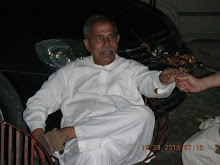
3 comments:
Reply
Reply to all
Forward
Print
Add M to Contacts list
Delete this message
Report phishing
Show original
Message text garbled?
M Jahangir to Bashir, Eisa, satguru108, dilawer_pal, Sumti, sublime_gul, aalrasheed2000, Murtaza, tayyabmail, naveed.ahmad, Nadeem, a.latif202, abdulkarim, faisal_iqbal_0., shariqtelenor, saqibwqadri, saleembutt, arvind, rajaajaib, khawer62, knight_goshi
show details May 13
I have had a chance of reading part of your travelogue, and appreciate your memory to the finest details. The writeup also leads me to a conclusion that place of birth has a very strong connection with human sentiments.
Being the one who happens to differ from your perspective, about which you were kind enough to make a mention on the out set of your travel report, I postpone it for a while to discuss , my comments and your understanding and explanation on it. Incidentally for the information of the readers I may safely call my self one of your best friends (In Pakistan) turned a relative over the time.
Through this communication , I would like to request you to pen down your experiences of Life in Pakistan also, Hope being in Pakistan over a period of over sixty years It will not take as many pages, extrapolated from Samjhota express, experience.
I am looking forward to seeing that write up started now, and spending your time and writing skills on this record as well, I assure you this is going to be a historical document.
I have no hesitation in accepting you right up as an unexampled piece, and congratulate you on having done that, irrespective of others opinions of right or wrong.
Please wait and stay calm, if it has a value (of which i am sure it has ), It will get printed
and receive several awards.
At the same time I would like to have comments of others on his mailing list, to be forth coming and commenting. there is no mention of senior or junior, please give your honest comments , give due credit . May like to see the age ( A brief intro) of the writer, if possible.
Some one out of the addressees, may like to summarize an out vis a vis Pak India relations, partition and all those critical points, we don't like to discuss openly.
With my best regards
M Jahangir
Islamabad
Pakistan
tariqmalik@power99.com.pk" to me
(9 hours ago)
A hairrasing account.i could feel the emotions khadim sb was going through
while visiting his birth place after 60 years.
you already know my views on partition: Khadim sb. rightly pointed out
that leaders of the calibre of Gandhi, Jinnah and Nehro could not fully
understand the partition game of which the dissection of Punjab and Bengal
was part. under the circumstances the bloodshed was inevitable.ALAS.
I feel for all the displaced/murdered in coldblood/separated.
With little more editing it could become a very impressive
autobiographical piece.
the note on the author also is revealing and speaks a lot for khadim sb.
tariq
bashir ahmad khadim to me
show details 10:18 pm (3 hours ago)
I greatly appreciate the blunt comments of Tariq Malik. Thanks indeed.
May I request him to either do himself or point out the editing
improvements. I shall be highly obliged. Thanks again for Tariq Malik
and Sh.M. Jahangir.
Bashir Ahmad Khadim
Post a Comment