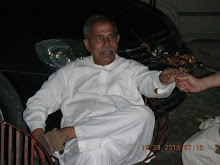
Muhammad Jahangir
1947 is the
earliest I can recollect my memory lane, at about patritian time. We were at Lyallpur (Now Faisalabad) and my father was working as an
office superintendent in Irrigation Department. This housing colony is situated
near the railway station, on either side of road leading to the city. The
colony had a boundary wall and I remember seeing many Sikhs moving on the road.
Suddenly danger sirens would start and people would rush to homes, since it was
an alarm of imposition of curfew and some fires some where. Water would start
in the pipes immediately. Can remember some people rushing homewards with their
half face shaved and having soap on the other side. So it was a complete
emergency and no kidding.
There were frequent fires in
the city and Fassadats also and we were instructed to be home and remain close
to it while playing. We would mostly hide behind the boundary wall when some
army trucks appeared on road. We were told and believed that if they see us
they would shoot us.
Slowly the tension built up
and immigrants started pouring in from across the border, clueless of where to
stay and what to eat and from. where.
Kaflas of refugees started to move from this side also. We were in doubt about
the future of Lyallpur being a part of India
or Pakistan , so my father
decided to shift the family to Sargodha
Had started my schooling in a
mission school, which I had to quit and change to Pakistan
I joined them in Pakistan Model School
I can remember non Muslims
sitting with their domestic Saman in the street of Lyallpur and Sargodha India Sargodha
In Sargodha Montgomery Sargodha
As the time passed flow of
migrates from across the borders increased so did their miseries and the issue
s of rehabilitation, food , jobs and connecting the families separated during
the travel. Any body or bodies not traceable was supposed to be dead by
default, the close relatives having a hope in every corner of their heart that
one day he/ she will knock the door and give us a surprise. The welcome spirit
started going down and the incumbents started thinking at home and learning to
break and occupy homes and shops for business. We were have families from all
over India
A mixed cultural scenario
started emerging and we had strangers as our class fellows, and neighbors in
the society. But all of it was in a brotherly manner and people never showed
hate or distrust in new comers. Main diff was the language and strangely enough
many homes in centre of Punjab started
switching to Urdu as a language with their children. As our great Father of the
nation declared it our national language. Every body had great expectations and
life of a new nation started with struggle, regard and sacrifice for each
other. The youngsters of Mahalla would stand guard at nights also for some law
and order situation and in day time also we would not aloww any strangers
making suspicious karkat in the area. That was the time any senior of the
mohalla would send u home after dant duppat ,if found playing in the heat or
sun. Block no 16 was a majority Muslim area and hence we did not get many new
families and friends.
By now as the partition
affairs started settling down , our family consisting of mother two sisters and
tree brothers went back to Lyallpur where as my uncles family and elder brother
Mohammad Wazir , who was a Delhi qualified Hakim and had a clinic or shop in
the city centre stayed back in Sargodha house. Soon after shifting we had to
come back when Hakim Sahib had a mishap of the death of his wife , the second
burial in the main Sargodha
Life started at Lyallpur in the same canal colony where we lived afterwards.
Many new people could be seen
in the offices some were coming from India
Later when in school one of
my class fellows told that we from Sargodha and Lyallpur are Janglis, as they liked to call us. It could
be in response to the natural but not good name of Mohajar or our classic way
of life, but was the first unpleasant shock of partition. However no ill
feeling and we were class fellows and friends all along.

Remembering Malik Muhammad Nawaz PSP. A teacher, a Cop or Reformer ?
Died in Islamabad. he was the first top cop of Islamabad.
Never met him as a police officer and never forgot him as a teacher. 1960-61 he was a teacher at
Government College Sargodha , now Sargodha university. His class always began with a few lines from the book, placed inverted open on the desk, Malik sahib sitting on the table and started discussing any thing on his mind about the students , development and Pakistan.
end of the period bell he would say remind me when astray, we have to finish the course work also.
when he came back from his civil services exam, asked about the papers , he responded not good, he was selected and explained it , " It was not that I was very good, the others were not.'
Still feel he might have brought about a bigger change , had he continued as a teacher.
God bless u malik sahib.end of the period bell he would say remind me when astray, we have to finish the course work also.when he came back from his civil services exam, asked about the papers , he responded not good, he was selected and explained it , " It was not that I was very good, the others were not.'Still feel he might have brought about a bigger change , had he continued as a teacher.God bless u Malik sahib.
when he came back from his civil services exam, asked about the papers , he responded not good, he was selected and explained it , " It was not that I was very good, the others were not.'
Still feel he might have brought about a bigger change , had he continued as a teacher.
God bless u malik sahib.end of the period bell he would say remind me when astray, we have to finish the course work also.when he came back from his civil services exam, asked about the papers , he responded not good, he was selected and explained it , " It was not that I was very good, the others were not.'Still feel he might have brought about a bigger change , had he continued as a teacher.God bless u Malik sahib.

1 comment:
I think its one of the best stories, I have read about partition and its impact on the people side. Thanks for sharing!
Post a Comment